BusinessLocal News
Uganda Registers Improved Local Government Performance as Museveni Calls for Results-Oriented Service Delivery
Uganda Registers Improved Local Government Performance as Museveni Calls for Results-Oriented Service Delivery

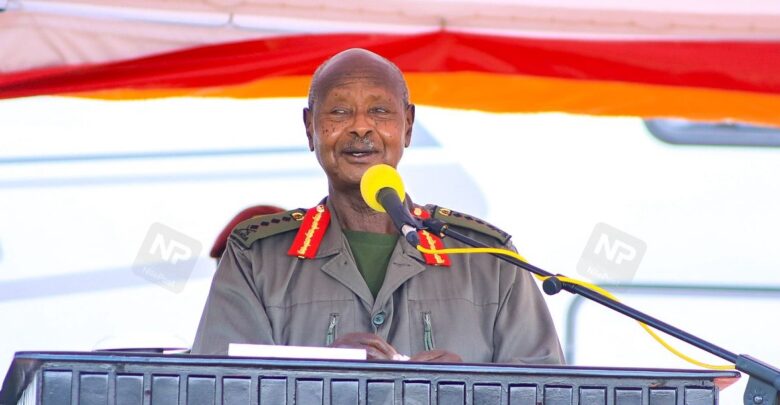
Kampala — Uganda has registered notable progress in local government performance, with national service delivery improving from 60.15 percent in 2024 to 67.2 percent in 2025, according to the latest Local Government Management of Service Delivery Assessment Report.
The development was highlighted during the closing ceremony of the National Performance Review Conference on Uganda’s Development Agenda, held in Munyonyo.
In a message delivered by Prime Minister Robinah Nabbanja, President Yoweri Kaguta Museveni emphasized the need for all Ministries, Departments and Agencies (MDAs), as well as local governments, to adopt results- and impact-oriented strategies to drive national transformation.
The President congratulated Isingiro District, Kiruhura District, and Nansana Municipality for emerging as the best-performing local governments in the 2026 National Performance Review Assessment.
According to the report, performance improvements were recorded across key sectors, with access to safe and clean water standing at 71 percent, health services at 82 percent, and education at 94 percent.
President Museveni reiterated that the government’s primary goal is to build an inclusive economy where all citizens participate in and benefit from development. He noted that Uganda’s transformation agenda is anchored on four key pillars: agro-industrialization, tourism development, mineral-based industrialization including oil and gas, and science, technology and innovation.
He urged Ugandans to embrace government wealth creation initiatives such as the Parish Development Model and Emyooga, aimed at transitioning households from subsistence living to participation in the money economy.
The President further highlighted ongoing investments in strategic infrastructure, including the Standard Gauge Railway, road networks, energy generation and transmission, and ICT systems, as critical enablers of socio-economic transformation.
On the global stage, President Museveni called for Africa to strengthen its collective voice and reduce dependence on external actors, emphasizing the need for accountable leadership and efficient use of resources to deliver tangible results for citizens.
Minister for General Duties in the Office of the Prime Minister, Justine Kasule Lumumba, noted that the assessment is based on 20 key performance indicators aligned with the National Development Plan. She also pointed to Uganda’s steady progress toward achieving the Sustainable Development Goals.
The conference concluded with resolutions aimed at enhancing economic performance and service delivery, including addressing financing gaps, reducing energy costs, tackling environmental challenges, and integrating science and technology into industrial growth and job creation.
Meanwhile, the Deputy Executive Secretary for Program Support at the United Nations Economic Commission for Africa, Mama Keita, urged African countries to redefine development partnerships on their own terms. She emphasized the importance of the African Continental Free Trade Area in boosting intra-African trade and called for policies that safeguard infrastructure investments and support private sector growth.
The conference reaffirmed Uganda’s commitment to shifting from policy commitments to measurable results in its national development agenda.
Reported by Issa Kigongo