EnvironmentHealth
Hope Emerges in Congo as Five Ebola Patients Leave Treatment Centres
Hope Emerges in Congo as Five Ebola Patients Leave Treatment Centres

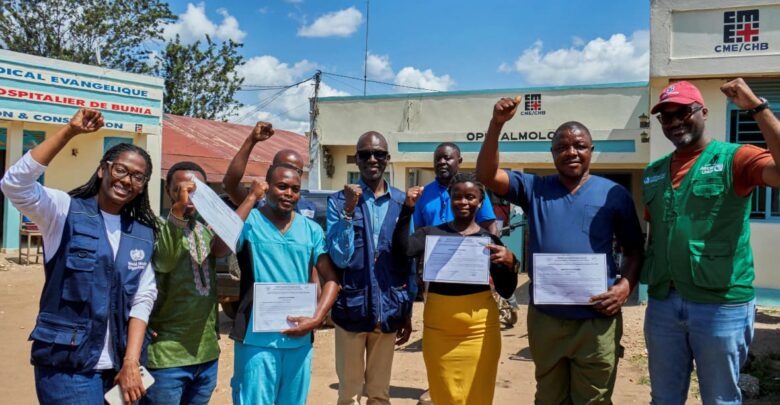
Five people infected with a rare strain of Ebola have recovered and been discharged from treatment facilities in the Democratic Republic of Congo, marking a significant moment in the country’s fight against the ongoing outbreak.
The announcement was made by World Health Organization (WHO) Director-General Tedros Adhanom Ghebreyesus during a visit to Bunia, the capital of Ituri province, where a new Ebola treatment centre was officially opened.
According to Tedros, four patients were discharged on Sunday, while another had already left care two days earlier. He noted that although scientists are still working to develop vaccines and treatments for the Bundibugyo strain of Ebola, recovery remains possible for infected patients.
The WHO previously confirmed that one patient had recovered from the Bundibugyo virus, the strain responsible for the current outbreak. The strain has no approved vaccine or treatment, making the recoveries especially significant.
Health authorities have recorded 134 confirmed Ebola cases across the Democratic Republic of Congo and neighbouring Uganda, with 18 confirmed deaths reported as of 29 May.
Among the survivors is Baraka Bulambulu, who described the fear and uncertainty experienced by patients during their illness. He said many people avoided close contact with them out of concern they might catch an unknown disease. After testing confirmed Ebola, Bulambulu and others feared they might not survive.
“Being able to come out of this alive is an immense source of happiness,” he said, adding that many others facing similar circumstances had died.
Another survivor, nurse Ezo Étienne, recalled that his illness began suddenly during hospital rounds. What started as dizziness quickly developed into vomiting, severe diarrhoea, intense itching and extreme weakness. He said it took seven tests before doctors confirmed he had Ebola.
Étienne explained that his treatment focused on managing symptoms through medication to control vomiting, fluids to prevent dehydration and pain relief. He urged both the public and healthcare workers not to ignore early warning signs such as headaches and vomiting, warning that misinformation often prevents people from seeking medical care quickly.
Meanwhile, aid organisation Doctors Without Borders (MSF) has warned that the outbreak is spreading faster than response efforts, despite improvements in health facilities and increased international assistance. The organisation has called for expanded testing, faster deployment of health workers and better access to medical supplies.
Health officials also continue to face resistance from some communities, particularly over burial procedures required to prevent further transmission of the virus. At least three attacks on health centres have been reported during the outbreak.
Speaking at the opening of the new treatment facility, Tedros stressed that community cooperation remains essential. He encouraged anyone experiencing symptoms to seek medical attention early, saying prompt treatment improves the chances of recovery.
He added that stopping the outbreak requires the involvement of every citizen and insisted that people infected with Ebola can recover when they receive the necessary support.
Efforts to contain the disease have also been complicated by insecurity in eastern Congo. Attacks by the Allied Democratic Forces (ADF), an armed group linked to the Islamic State, along with violence involving local militias, have disrupted response operations.
Despite the challenges, health officials say the recent recoveries offer encouragement. Pierre Akilimali of Congo’s National Institute of Public Health said there is reason for optimism, while doctors working at the treatment centre reported positive results from the symptomatic care currently being provided.
Medical teams believe the outbreak can be brought under control with continued cooperation from communities and support from health partners.
Source BBC