International News
Floors Collapse, People Trapped: Powerful 7.1 Earthquake Strikes Japan’s Kumamoto as Death Toll Feared to Rise
Floors Collapse, People Trapped: Powerful 7.1 Earthquake Strikes Japan's Kumamoto as Death Toll Feared to Rise

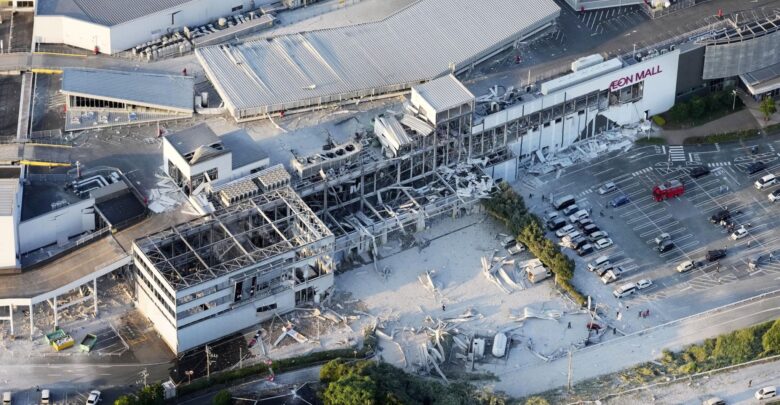
KUMAMOTO, Japan — A powerful 7.1-magnitude earthquake struck Japan’s southwestern Kumamoto Prefecture on Tuesday afternoon local time, collapsing the second floor of one of the region’s largest shopping centres, trapping an unknown number of people inside and triggering fires, building collapses, a derailed cargo train and a tsunami advisory across Kyushu island.
The earthquake struck at 4:27 pm local time, according to the Japan Meteorological Agency, with the epicentre located approximately 90 kilometres east of Nagasaki in southern Japan. The tremor was felt across a wide swathe of Kyushu — Japan’s southernmost main island and one of the country’s most seismically active regions — and was strong enough to cause a highway bridge to buckle and crack roads across the prefecture.
**The Aeon Mall Collapse**
The most devastating impact of the earthquake was at Aeon Mall Kumamoto, one of the region’s largest shopping centres, located in Kashima Town in Kumamoto Prefecture. Shortly after the initial tremor struck, emergency services began receiving multiple calls reporting what sounded like an explosion inside the mall. Part of the building’s second floor subsequently collapsed, trapping a large number of people inside.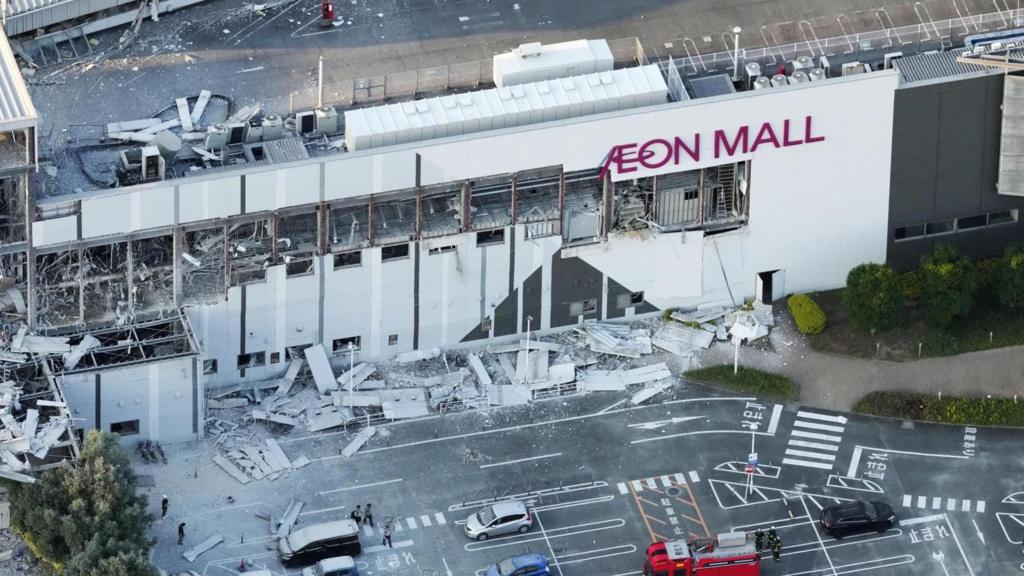
Japan’s Fire and Disaster Management Agency confirmed that it had received reports from the local fire department indicating numerous people were believed to be trapped following the floor collapse. Rescue teams were dispatched to the scene but NHK, citing fire officials, reported that firefighters were unable to enter the building from the first floor — a critical obstacle hindering their rescue operations as teams worked to find alternative entry points.
TBS broadcaster and France 24 reported that a “considerable number” of people inside the shopping centre had died, though police told AFP they could not yet confirm whether fatalities had occurred. An Aeon spokesperson confirmed that customers and employees had been ordered to evacuate immediately after the initial quake struck, and said the exact cause of the subsequent explosion that preceded the floor collapse remained unclear.
Eyewitness Kazuya Tsurunaga told TBS he heard the explosion while clearing up dishes broken by the earthquake inside a nearby pub approximately 300 metres from the Aeon mall — a detail that illustrates both the proximity of the blast and the chaos that had already gripped the area in the minutes following the quake.
**The Wider Destruction**
The earthquake’s impact extended far beyond the Aeon Mall. At least 50 people were taken to hospital with injuries, NHK reported. At least 12 houses had collapsed across the area, with four separate cases in which people were confirmed to be trapped inside residential properties. A cargo train derailed. Television footage broadcast on NHK showed several blazes burning across the affected zone, damaged bridges, and cracked and buckled roads.
More than 46,000 households in the Kumamoto area were without power in the immediate aftermath of the earthquake, though Kyushu Electric Power confirmed the figure was declining as restoration work began. The company established an emergency response unit to coordinate recovery efforts.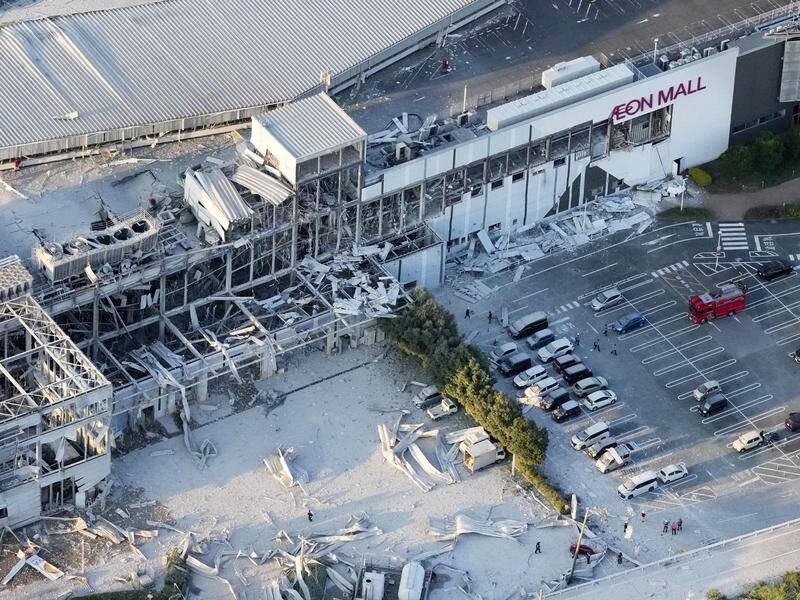
The earthquake also triggered a precautionary tsunami advisory for coastal areas of Kyushu, though there were no immediate reports of significant tsunami activity at the time of publication. JR Kyushu, the regional rail operator, suspended all services including its high-speed Shinkansen bullet trains across the island as a safety precaution.
The impact was felt in Japan’s crucial technology manufacturing sector. TSMC — the world’s largest contract chipmaker, which operates a major plant in the Kumamoto area — evacuated workers from its facility as a precaution. Sony and Fujifilm also evacuated staff from their plants in the region, according to Nikkei newspaper. Kyushu Electric Power confirmed there were no reports of irregularities at either its Sendai or Genkai nuclear power stations following the earthquake. The UN’s International Atomic Energy Agency, citing Japan’s Nuclear Regulation Authority, separately confirmed that the Sendai nuclear power station — located approximately 100 kilometres from the earthquake’s epicentre — had not sustained damage.
**The Government Response**
Prime Minister Sanae Takaichi addressed reporters shortly after the earthquake struck, confirming that the tremor had collapsed buildings and sparked fires in Japan’s southwest and stressing that nine people were unaccounted for in the initial police assessment. Takaichi pledged a full government response and urged citizens in affected areas to prioritise their safety and follow instructions from emergency services.
**Kumamoto’s Tragic Familiarity**
For the people of Kumamoto, Tuesday’s earthquake carried the weight of recent and devastating memory. In April 2016, the region was struck by a sequence of earthquakes — including two major tremors within 24 hours of each other — that left more than 50 people dead, more than 1,800 injured and tens of thousands of homes damaged or destroyed across the prefecture. The 2016 Kumamoto earthquakes remain among the most damaging in Japan’s recent seismic history and resulted in sweeping changes to building safety assessments across the region.
Japan experiences more earthquakes than almost any country on earth — by some estimates, a tremor occurs somewhere on the Japanese archipelago at least every five minutes. The country’s strict building codes and comprehensive disaster preparedness systems — developed and refined over decades of seismic experience — have repeatedly saved lives. Whether those systems were sufficient to protect the people trapped inside Aeon Mall Kumamoto on Tuesday afternoon remained, at the time of publication, an agonising question without an answer.
SOURCE BBC NEWS