BusinessTechnology
Microsoft Claims Major Breakthrough with Next-Generation Quantum Chip
Microsoft Claims Major Breakthrough with Next-Generation Quantum Chip

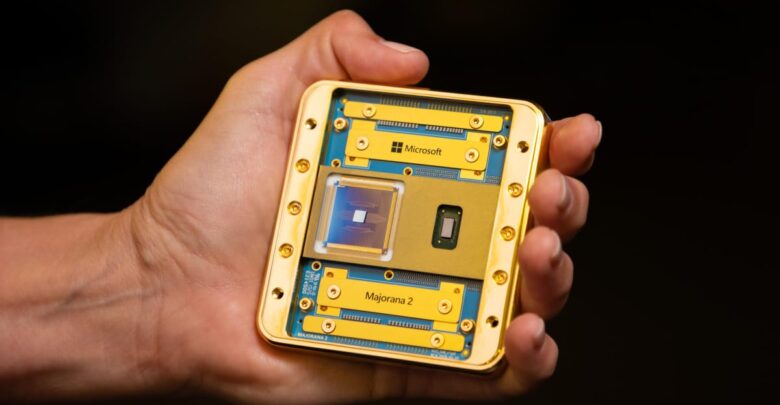
Microsoft has unveiled a new quantum computing chip, Majorana 2, which the company says is 1,000 times more reliable than its predecessor, marking what it describes as a significant step toward commercially useful quantum computers.
The announcement comes as technology companies race to develop quantum machines capable of solving complex problems in fields such as medicine, chemistry and cybersecurity that are beyond the reach of conventional computers.
According to Microsoft, the new Majorana 2 chip delivers major improvements in qubit stability. Qubits are the basic units of information in quantum computing, but they are highly sensitive to disturbances and prone to errors. The company says qubits on the new chip survive for an average of about 20 seconds, compared with milliseconds on the previous Majorana 1 chip, with some lasting for more than a minute.
Microsoft said the performance gains were achieved through a redesigned materials system. Unlike many competing quantum chips that use aluminum-based superconductors, Majorana 2 uses lead-based superconducting materials. Company executives said artificial intelligence tools helped researchers identify and develop the new materials and manufacturing processes required for the chip.
The company also announced a target of 2029 for developing commercially useful quantum computing systems, bringing its timeline in line with some of its major competitors in the field.
However, Microsoft’s claims continue to face scrutiny from some scientists. Critics argue that more publicly available data and independent verification are needed to confirm the company’s results and its claims regarding Majorana particles, which form the foundation of Microsoft’s quantum computing approach.
Microsoft has defended its work, saying it has shared extensive information with research partners and government agencies while protecting proprietary technology. Company executives maintain that the scientific evidence supporting the chip’s design is strong enough to justify continued investment in engineering and development.
If the company’s claims are confirmed through further testing and independent review, Majorana 2 could represent an important advance in the effort to build practical, large-scale quantum computers capable of tackling problems that today’s most powerful computers cannot efficiently solve.
Source BBC