Local News
What the Minister Saw at Midnight: Baryomunsi Orders Probe as Mbarara Hospital Crisis Is Laid Bare
What the Minister Saw at Midnight: Baryomunsi Orders Probe as Mbarara Hospital Crisis Is Laid Bare

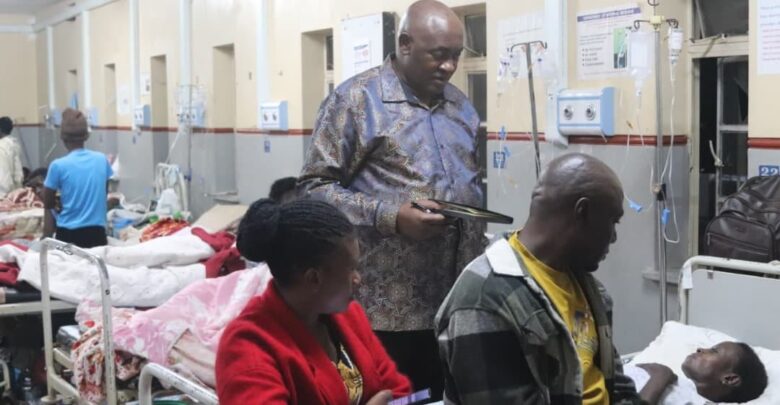
MBARARA — Patients sharing beds. Others lying on the floor. Essential medicines missing. Sick people who had not been attended to for hours. And security so inadequate the minister who found all of this walked in unannounced, after midnight, without anyone stopping him.
Health Minister Dr Chris Baryomunsi’s unannounced night inspection of Mbarara Regional Referral Hospital on Saturday has sparked a formal investigation into one of Uganda’s most critical public health facilities — and ignited a national conversation about the true state of care in the country’s regional hospitals.
What the Minister Found
Baryomunsi arrived at the hospital late on Saturday night without warning, walking the wards himself to see conditions as they actually are rather than as administrators prepare them to appear. What he found was a system under severe, sustained strain. Patients were sharing beds. Others had been placed on the floor for lack of space. Essential medicines were in short supply. Patients had been left unattended. Security was inadequate for a facility of its size and vulnerability.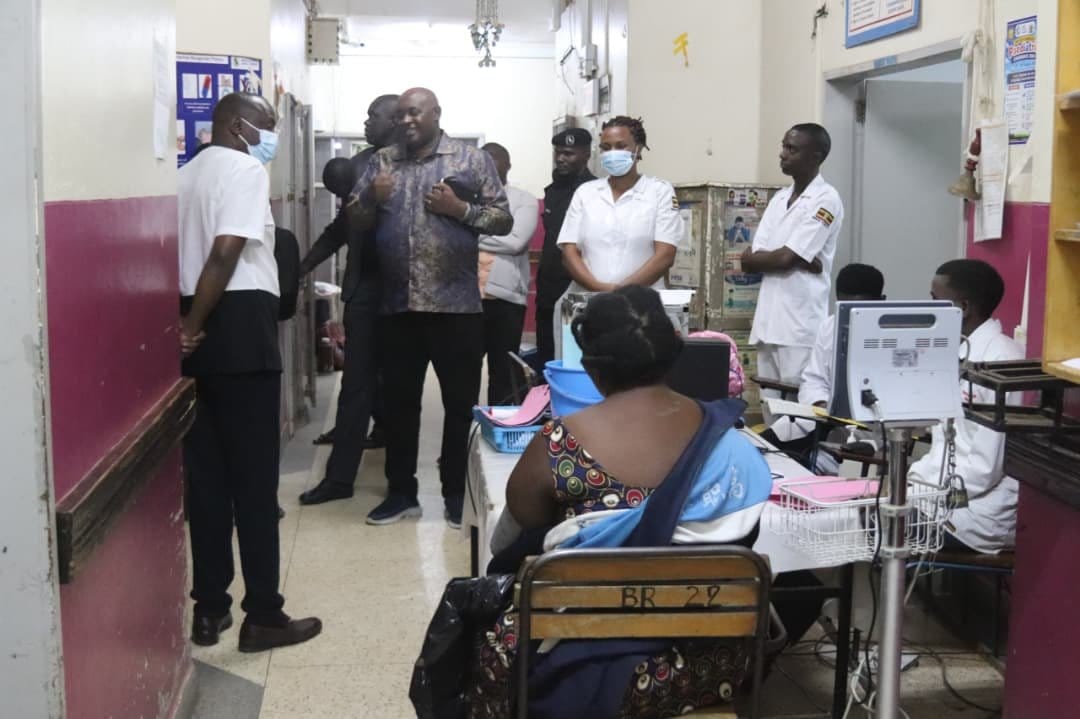
The minister ordered an immediate investigation following the visit, with findings expected to be delivered to his ministry. Hospital management was put on notice.
A Hospital Already Under Scrutiny
Baryomunsi’s intervention did not emerge in a vacuum. Mbarara Regional Referral Hospital has been in the crosshairs of accountability institutions for much of 2026. In February, the Inspector General of Government carried out her own impromptu inspection and uncovered a catalogue of failures: a digital X-ray unit operating with expired films — forcing patients to photograph scan images with their mobile phones for doctors to interpret; idle CT scan and ultrasound machines; extreme overcrowding with patients admitted under beds and in outdoor tents; and medical officers allegedly demanding cash payments of between Shs200,000 and Shs700,000 for services that are legally free, without issuing receipts.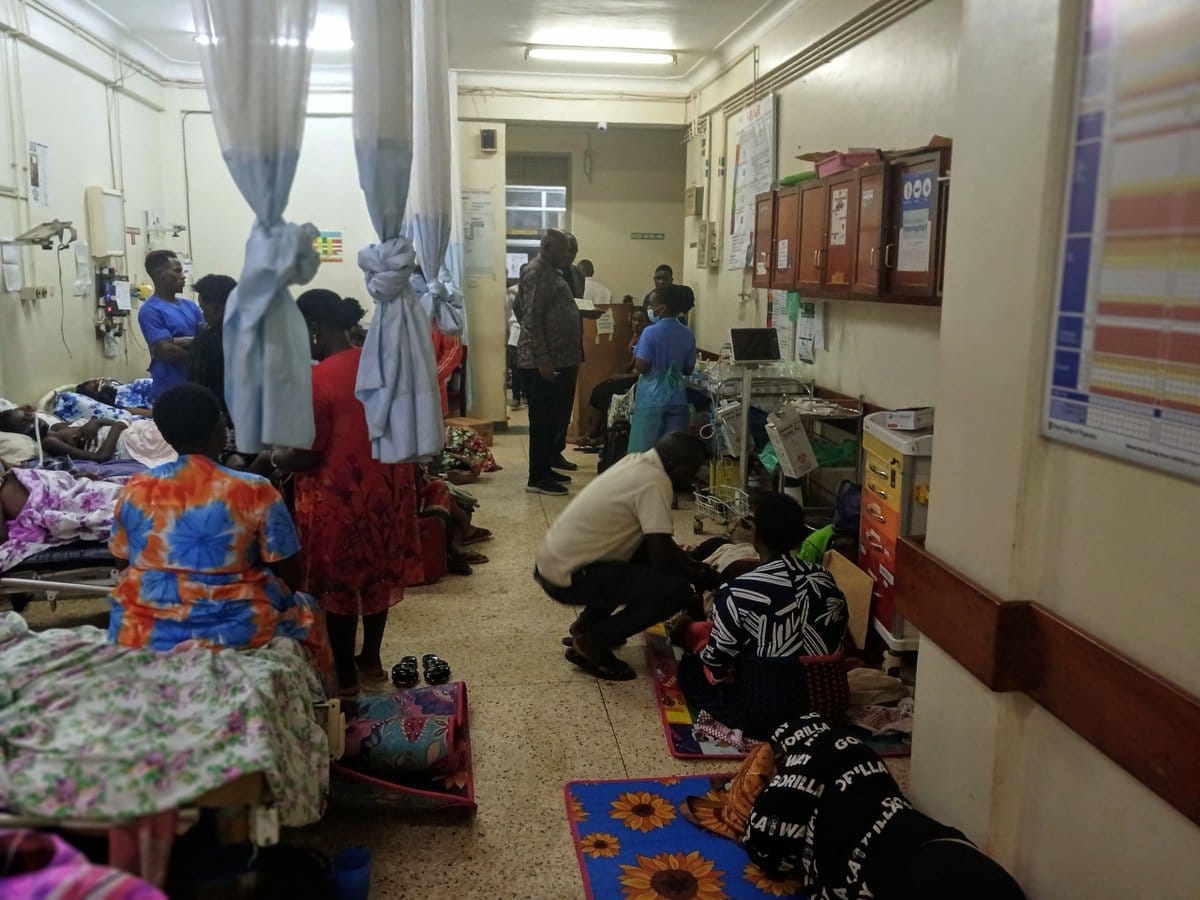
The hospital’s own Executive Director, Dr Deus Twesigye, acknowledged the problems in February, blaming the CT scan failure on space constraints and attributing overcrowding partly to patients who refused to leave even after discharge. The hospital has an official inpatient bed capacity of 554, but routinely handles an average of 660 admissions daily — a daily overflow of more than 100 patients — while serving as the primary referral point for the entire Ankole sub-region and receiving patients from Mbarara, Bushenyi, Ntungamo, Isingiro, Kiruhura, Ibanda and neighbouring countries including Rwanda, Tanzania, the Democratic Republic of Congo and Burundi.
The ICU Tribute That Shocked a Nation
If the minister’s findings were damning, the hospital’s own response made matters far worse. Less than a day after Baryomunsi’s inspection, the hospital posted on X to announce the death of what it called its longest-staying ICU patient — Claire Kirabo, who had spent six years in the intensive care unit after being admitted unconscious and later regaining awareness. The post was framed as a tribute, describing her stay as the longest in the hospital’s history.
The announcement provoked immediate and sharp public anger. Coming within hours of the minister’s inspection exposing neglected patients and shortages of medicines, Ugandans asked how a patient could spend six years in an ICU at a facility unable to ensure basic care for patients on wards the same night. Many described the tribute as tone-deaf and ill-timed. Others questioned the conditions under which Kirabo had spent six years and whether the resources devoted to her extended stay had contributed to the hospital’s overall strain.
A Pattern That Demands an Answer
The problems at Mbarara are not unique to one facility, but they are especially pronounced there because of the hospital’s scale of responsibility. Founded in 1940 and affiliated with Mbarara University of Science and Technology — where it serves as the primary teaching hospital for the medical school — the institution has evolved over eight decades into the backbone of health service delivery across a vast swathe of western Uganda and beyond. It performs specialised and super-specialised services across surgery, urology, ENT, neurosurgery, orthopaedics, obstetrics and more. The pressure that creates is immense and documented.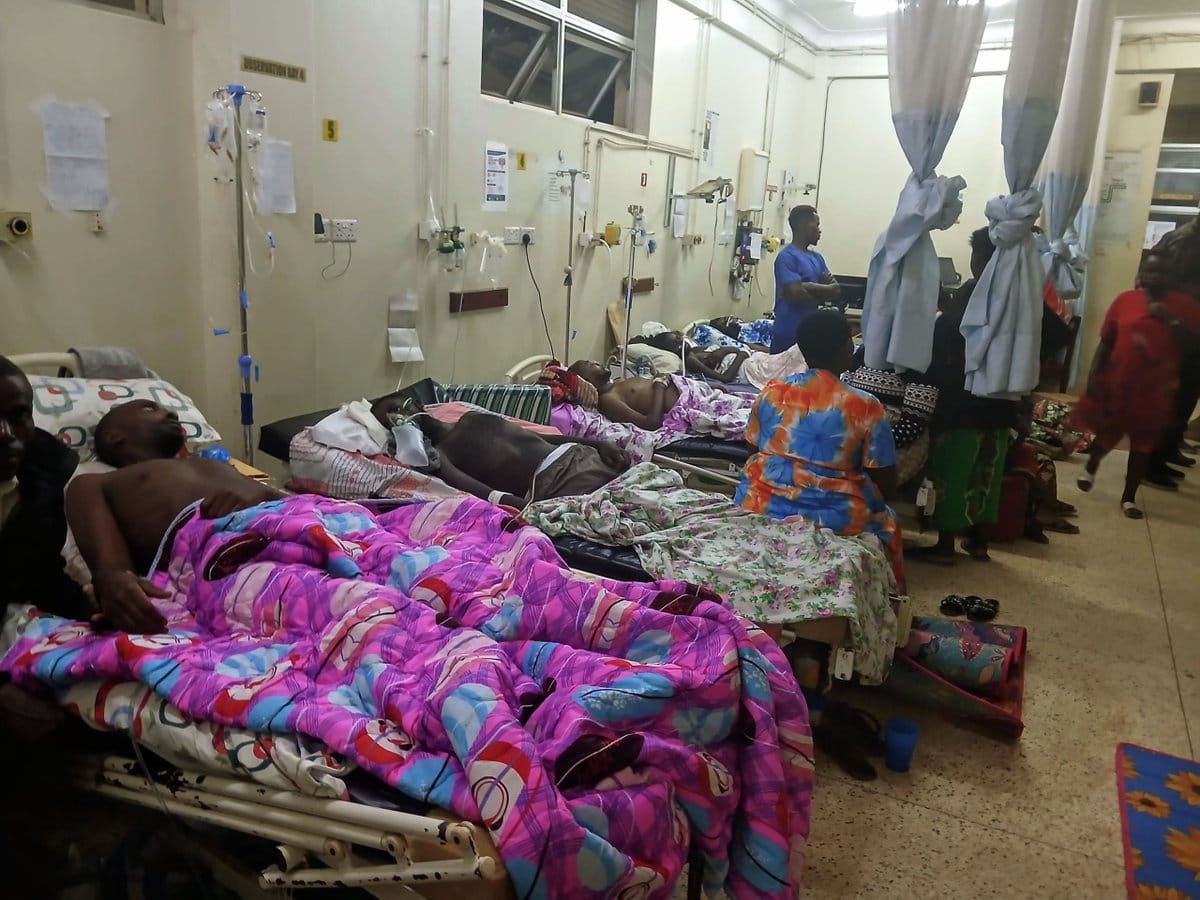
What Saturday night exposed was that the pressure had not been matched by accountability, oversight or — critically — attendance. A minister should not be the one discovering at midnight that patients are lying on the floor without care. That is a management failure, a supervisory failure, and — if the IGG’s earlier findings of illegal charges are confirmed — a governance failure.
The probe Baryomunsi has ordered now carries a burden beyond administrative compliance. For the patients who sleep on the floors of Mbarara Hospital every night, and for the families who trust it with their lives, the question is not just what the investigation finds. It is what, this time, is actually done about it.
SOURCE NILE POST