BusinessLocal News
Government Expands LoCAL Facility as Denmark Commits USD 23.4M
Government Expands LoCAL Facility as Denmark Commits USD 23.4M

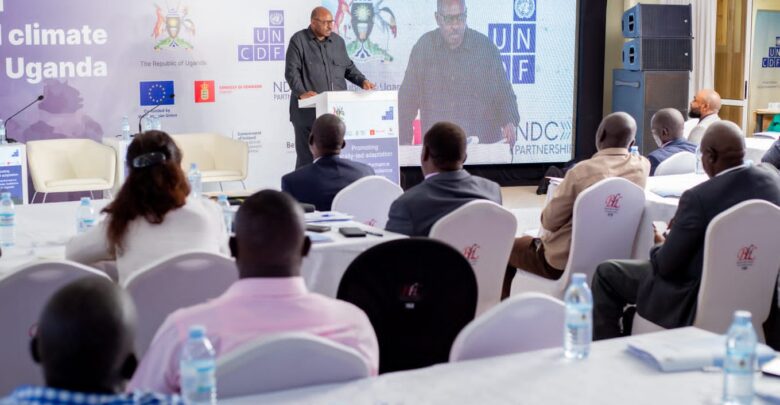
Twenty-four districts across Uganda are now benefiting from the UNCDF LoCAL Facility, up from just four pilot districts in 2023, as the Government accelerates locally led climate adaptation with fresh backing of USD 23.4 million from Denmark. The benefiting districts include Kasese, Nebbi, Nwoya, Nakapiripirit, Zombo, Kikuube, Koboko, Bulambuli, Kitgum, Nabilatuki, Agago, Kiboga, Kotido, Moroto, Bukedea, Bukwo, Butaleja, Pallisa, Napak, Amuru, Gulu, Kyankwanzi, Terego, and Rwampara.
This progress was presented at the 4th Annual National LoCAL Workshops held in Moroto (21–23 April 2026) and Gulu (28–30 April 2026), convened under the co-leadership of the Ministry of Local Government, Ministry of Water and Environment, Ministry of Finance, Planning and Economic Development, National Planning Authority, and the Office of the Prime Minister, in partnership with the United Nations Capital Development Fund (UNCDF).
While officially opening the workshop, the Permanent Secretary, Ministry of Local Government, Mr. Ben Kumumanya, emphasized the significance of the initiative, noting that, “LoCAL is Uganda’s gateway to locally led climate finance, ensuring resources reach the last mile, while focusing on sustainable investments ”
The LoCAL mechanism integrates performance-based climate resilience grants within the Intergovernmental Fiscal Transfer System, complemented by technical assistance and capacity building to strengthen community resilience. It is further supported by partners including the Embassy of Denmark, Embassy of Ireland, the Kingdom of Belgium, the European Union, and the NDC Partnership.
District leaders welcomed the Facility as both timely and transformative. The benefiting District Chairpersons expressed appreciation to the Permanent Secretary for selecting them for the intervention, describing it as coming at a critical moment for communities already facing the effects of climate change. They committed to vigilant implementation to ensure success and strong performance in the next National Assessment, while adhering to guidelines, strengthening coordination, ensuring accountability, and learning from more experienced districts.

Speaking on behalf of the districts, Deputy CAO Nwoya District, Mr. Yusuf Akubonabona, commended the Ministry of Local Government, UNCDF anf othet implementing partners noting that the support comes at a critical time for districts long affected by climate risks, and expressed hope for further expansion to reach more vulnerable areas. Justine Adrain, the UNCDF Representative, emphasized the need for sustained momentum: “The Ministry of Finance, Ministry of Local Government, and UNCDF must continue to scale up and mobilize more resources to extend this support to additional districts.” while noting that the Danish government had already committed USD 23.4M to Local Climate Adaptation.
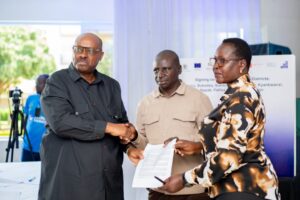
Over the past four years, 14 participating districts have delivered UGX 14 billion in locally led adaptation investments. Ten new districts now join the Facility, marking a significant step forward.
With this scale-up, the Government of Uganda plans to transfer UGX 17 billion in FY 2026/27 through Performance-Based Climate Resilient Grants to the 24 districts, supporting continued investments under the National Development Plan IV, aligned with Vision 2040 and complementing initiatives such as the Parish Development Model.
Closing the workshop on behalf of the Permanent Secretary, Assistant Commissioner for District Administration, Mr. J.J. Ettedu, reminded participants that impact lies in action: “The true value of this training is in implementation. Let’s take these lessons back to our districts, move beyond resolutions, and work as a team with integrity to build a more climate resilient Uganda.”
The regional engagements brought together district leaders, central government institutions, and technical partners to assess progress, strengthen capacity, and align priorities for scaling climate resilience at the local level.
by Issa Kigongo