International News
Supreme Court Delivers Stinging Defeat to Trump, Ruling Birthright Citizenship Is a Constitutional Guarantee
Supreme Court Delivers Stinging Defeat to Trump, Ruling Birthright Citizenship Is a Constitutional Guarantee

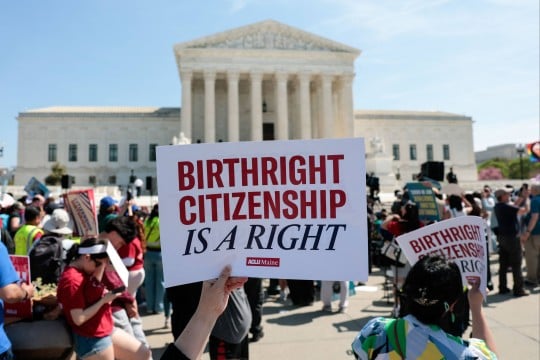
WASHINGTON — The United States Supreme Court handed President Donald Trump one of the most significant legal defeats of his second term on Tuesday, ruling 6–3 that birthright citizenship is enshrined in the Constitution and cannot be stripped away by executive order.
The decision, issued on the final day of the court’s 2025–2026 term in the case *Trump v. Barbara*, strikes down an executive order that Trump signed on the first day of his return to the White House — an order that sought to deny automatic citizenship to children born on American soil to parents who are in the country illegally or on temporary visas. The ruling reaffirms a constitutional principle that has stood unchallenged for more than 150 years.
Chief Justice John Roberts wrote the majority opinion, grounding the decision firmly in the text and history of the Fourteenth Amendment, ratified in 1868 in the aftermath of the Civil War. Drawing on the values of the Founding era and the ambitions of the Reconstruction Congress, Roberts wrote that citizenship had long been understood as the foundational right from which all others flow. The Framers of the Fourteenth Amendment, he wrote, deliberately extended that promise to every person born on American soil — and the court’s duty on Tuesday was simply to keep it.
The ruling was not a clean ideological sweep. Five justices joined Roberts’ constitutional opinion — the three liberal justices, Sonia Sotomayor, Elena Kagan and Ketanji Brown Jackson, and conservative Justice Amy Coney Barrett, the third justice appointed to the court by Trump himself. A sixth justice, Brett Kavanaugh, concurred in the outcome but declined to reach the constitutional question, concluding instead that a long-standing federal statute independently guarantees birthright citizenship and that was sufficient to resolve the case.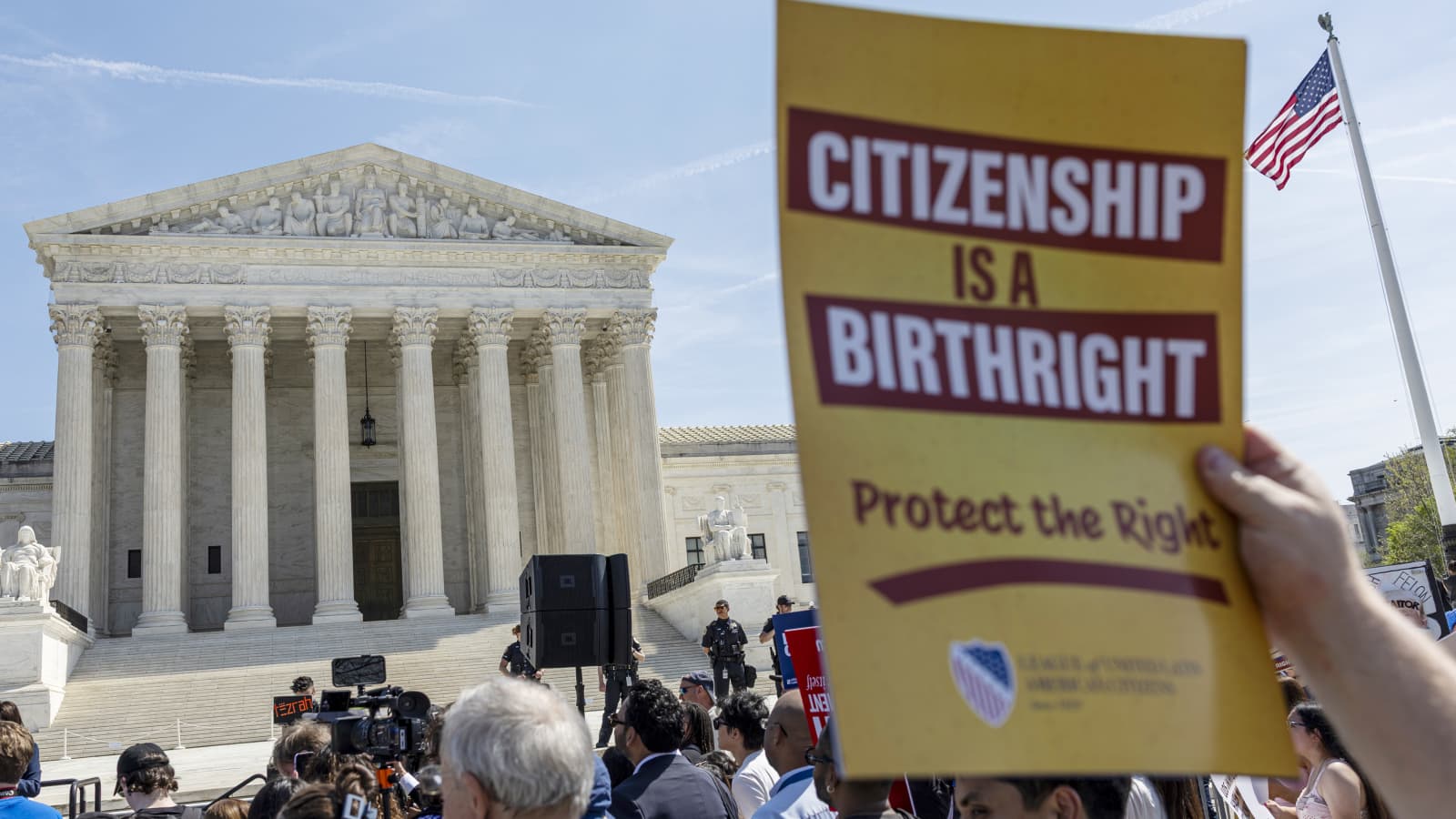
Three conservative justices — Samuel Alito, Neil Gorsuch and Clarence Thomas — dissented. Justice Thomas, in a 91-page dissent nearly three times the length of Roberts’ majority opinion, argued that the court had misread the Fourteenth Amendment, contending it was designed after the Civil War to secure equal rights for freed Black Americans and had since been stretched far beyond its original scope. Justice Alito was more blunt, writing simply that the court had made a serious mistake.
The legal challenge was brought by the American Civil Liberties Union, the NAACP Legal Defense Fund, the Asian Law Caucus and allied organisations on behalf of children who would have been denied citizenship under Trump’s order. Federal district courts and two federal appellate circuits had already blocked the order from taking effect, meaning no child has yet lost citizenship as a result of the policy. Tuesday’s ruling permanently ends any prospect of it doing so.
The decision carries significant human stakes. An estimated hundreds of thousands of children are born in the United States each year to parents who are undocumented or temporarily present — including students, those on work visas and applicants for green cards. Trump’s order would have denied all of them citizenship. Critics pointed out that the restrictions would have applied not only to children of undocumented immigrants but to those born to parents in the country entirely legally.
Trump, who had anticipated the loss, took to his Truth Social platform before the ruling to attack what he called dumb judges and justices, and had pre-emptively urged Congress to act legislatively to end birthright citizenship, a step that constitutional scholars widely consider equally unworkable given the Fourteenth Amendment’s explicit text. After the ruling, Trump repeated that call, writing that Congress should begin work today on ending what he called expensive and unfair birthright citizenship, pledging his complete and total support. Legal experts swiftly noted that any statutory attempt to restrict birthright citizenship would face the same constitutional barrier the court reaffirmed on Tuesday.
The ruling marks the second major legal setback for the administration before the Supreme Court, following an earlier decision in which the justices struck down the sweeping global tariffs Trump had imposed under an emergency powers statute. On both occasions, the president responded with sharp personal criticism of the justices who ruled against him.
Birthright citizenship’s historical resilience is notable. Legal scholars observed that even during periods of intense hostility to immigration in American history — including the internment of Japanese Americans during the Second World War — the principle that any child born on American soil is automatically a citizen was never seriously challenged. The executive order Trump signed in January 2025 was the first time any president had attempted to undo that principle by decree.
The ACLU’s Cecillia Wang, who argued the birthright citizenship case before the court in April, framed the constitutional philosophy at its heart in stark terms: the men who wrote the Fourteenth Amendment deliberately chose to confer citizenship on the child rather than the parent — the idea being that in America, children are not punished for the circumstances of their birth.
In keeping that promise on Tuesday, the court closed the door firmly on one of the most legally contentious pillars of the Trump administration’s immigration agenda.
SOURCE BBC NEWS