Healthregional news
Byanyima Warns HIV Gains at Risk as US Moves to End Key South Africa Health Funding
Byanyima Warns HIV Gains at Risk as US Moves to End Key South Africa Health Funding

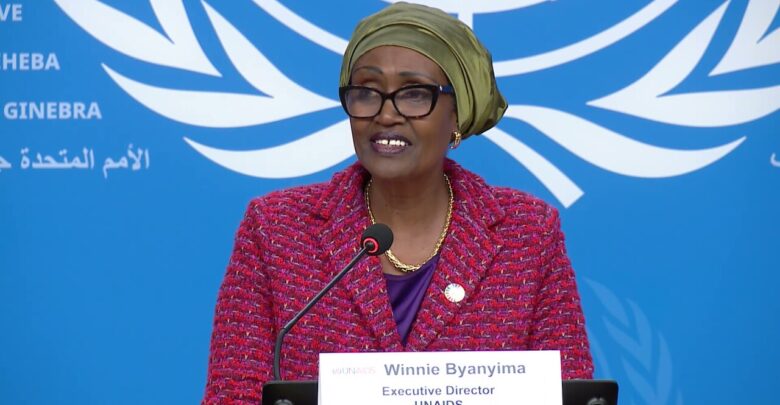
GENEVA — UNAIDS Executive Director Winnie Byanyima has called on the United States to reconsider its decision to phase out critical HIV/AIDS funding for South Africa, warning that the move could jeopardize millions of lives and undermine decades of progress in the global fight against the disease.
Speaking ahead of a high-level United Nations conference on HIV/AIDS, Byanyima expressed concern over Washington’s plans to gradually withdraw support provided through the President’s Emergency Plan for AIDS Relief (PEPFAR), a programme that has played a central role in South Africa’s HIV response for more than two decades.
South Africa carries the world’s largest HIV burden, with an estimated eight million people living with the virus. According to UNAIDS, PEPFAR has contributed more than $400 million annually to the country’s HIV programmes and has supported the salaries of roughly 15,000 health workers. The programme has accounted for up to 17 percent of South Africa’s HIV funding.
“I would ask the United States to reconsider its position,” Byanyima said, arguing that a sudden withdrawal of support could have severe consequences for vulnerable communities that continue to depend on HIV prevention, testing and treatment services.
The US State Department defended the decision, saying South Africa is a middle-income country capable of financing its own health programmes and that PEPFAR was never intended to be a permanent source of funding. The department also cited concerns over Pretoria’s response to certain policy requests made by the US administration.
Byanyima’s appeal comes amid broader concerns over declining international aid for HIV programmes worldwide. UNAIDS has warned that funding reductions are already disrupting prevention efforts, with HIV testing rates falling in several high-burden countries and access to preventive measures such as condoms and pre-exposure prophylaxis (PrEP) declining sharply.
Recent UNAIDS data indicates that nearly nine million people globally still lack access to lifesaving HIV treatment, while approximately 1.2 million people were newly infected with the virus last year. Health experts fear that continued funding cuts could reverse years of progress and increase both new infections and AIDS-related deaths.
The agency has repeatedly emphasized that ending AIDS as a public health threat by 2030 will require sustained investment, particularly in prevention programmes that remain heavily dependent on international support in many African countries.
As governments gather to discuss the future of the global HIV response, Byanyima urged donors to pursue carefully planned transitions rather than abrupt funding withdrawals, warning that lives remain at stake.
“We cannot afford to lose the gains that have been made,” she said, stressing that continued international cooperation will be essential if the world is to achieve its goal of ending AIDS within the next decade.
Source DAILY MONITOR