Local News
No State Shall Choose His Lawyers: Eron Kiiza Fires Back as Besigye Refuses Court-Appointed Advocates
No State Shall Choose His Lawyers: Eron Kiiza Fires Back as Besigye Refuses Court-Appointed Advocates

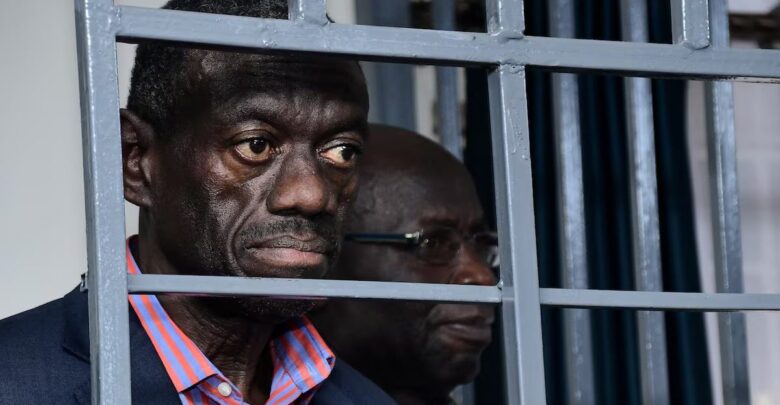
KAMPALA — Human rights lawyer Eron Kiiza has delivered a direct and pointed appeal to Uganda’s legal community: do not take this case. Step aside and let Dr Kizza Besigye be defended by the lawyers he chose.
The call came this week as Besigye’s treason trial descended into a constitutional standoff — one that has placed the right to legal representation at the centre of a case already shadowed by allegations of abduction, intimidation and the systematic dismantling of his defence team.
A Trial Stripped of Its Lawyers
Dr Kizza Besigye, 70, Uganda’s four-time presidential candidate and the country’s most prominent opposition figure, has been held in custody since late 2024, when he was abducted in Nairobi, Kenya and smuggled back to Uganda. His treason trial — on charges that he and co-accused Obeid Lutale plotted to overthrow President Yoweri Museveni’s government through meetings in Kampala, Nairobi, Geneva and Athens, while seeking funding, weapons and paramilitary support — formally opened on Monday, July 13, 2026, at the High Court in Kampala.
It opened without his lawyers.
In June 2026, his lead advocate and former Kampala Lord Mayor Erias Lukwago was seized by the army and thrown in jail. Kenyan Senior Counsel Martha Karua — whom Besigye had specifically designated as his lead lawyer, instructing that no court business proceed without her — was barred from entering Uganda entirely. The systematic removal of his chosen legal team left Besigye and Lutale standing before the court effectively unrepresented on the first day of the most consequential trial in the country’s recent legal history.
The Court’s Response — and Besigye’s Defiance
High Court Judge Justice Emmanuel Baguma ruled that the trial would proceed regardless, directing the registrar to furnish both accused with a list of 786 advocates available under Uganda’s State Brief scheme — a government-funded legal aid programme for those facing serious criminal charges. Justice Baguma made clear that if Besigye and Lutale declined to select from the list, the registrar would appoint lawyers on their behalf to ensure the trial moved forward.
Besigye refused. On Wednesday, July 15, he appeared before the court and rejected the state-provided list outright, telling Justice Baguma directly: “The legal team we had is one in whose competence we placed full confidence.” He complained that the list lacked sufficient detail for him to assess the advocates’ experience in handling complex, multi-jurisdictional criminal cases — particularly those involving technical electronic evidence. He reiterated his demand for the return of Martha Karua and Erias Lukwago, provided their security concerns were addressed, and argued he was also being illegally denied bail and medical treatment.
Justice Baguma granted a two-week adjournment, directing prison authorities to facilitate meetings between Besigye, Lutale and potential state-appointed advocates, and ordering three initially proposed lawyers to submit their CVs. The case was adjourned to July 29, 2026.
Kiiza’s Constitutional Stand
Into that impasse stepped Eron Kiiza — himself no stranger to the cost of defending Besigye. In January 2025, Kiiza was arrested at a military court and sentenced to nine months in Kitalya Prison, serving nearly three months before being released on bail of Shs20 million. His willingness to continue advocating for Besigye after that experience speaks to both his commitment and the stakes of this trial.
In a statement issued on Tuesday, Kiiza framed the issue in unambiguous constitutional terms. “The right of Dr Kizza Besigye and Mr Lutale to lawyers of their own choosing is not a courtesy the State may grant or withdraw at pleasure,” he said. “It is a non-derogable guarantee under Articles 28(3)(d) and 44 of the 1995 Ugandan Constitution.
He called directly on advocates listed under the High Court’s State Brief register to decline any appointment to the case. “Besigye and Lutale are not without lawyers. They have chosen counsel — able, willing, and ready,” he said, arguing that the only reason the accused stood without representation was because the state had systematically prevented that representation from being exercised.
Kiiza told AFP that Besigye’s chosen lawyers had been “deported, abducted and terrorised” — a summary of events that the public record largely bears out. Lukwago is in military detention. Karua is barred from the country. And the harassment of other members of the defence team, Kiiza alleged, had continued.
The Charges and the Constitutional Questions
The treason charges allege that Besigye and Lutale plotted to overthrow the government through meetings in Kampala, Nairobi, Geneva and Athens, seeking funding, weapons and paramilitary support, with allegations including plotting assassinations and acquiring illicit materials. Prosecution confirmed it had complied with a court order to disclose all evidence, including witness statements and electronic exhibits, which Besigye and Lutale acknowledged receiving.
But the legal and constitutional questions now threatening to overwhelm the trial itself go beyond the charges on the sheet. Can a court compel an accused person to accept lawyers chosen by a state that is simultaneously his accuser, his prosecutor and — in Kiiza’s formulation — effectively his jailer? Can a trial that began with the removal of its defence team be considered fair? And can Uganda’s legal profession, by accepting state-appointed briefs in this case, be complicit in a process that at least one of its own members has characterised as a systematic assault on the rule of law?
Those questions will hang over Court 6 when the case resumes on July 29.
SOURCE NILEPOST