Local News
“Mzee Will Be My Campaign Manager”
Inside Muhoozi's Methodical March to Uganda's Presidency

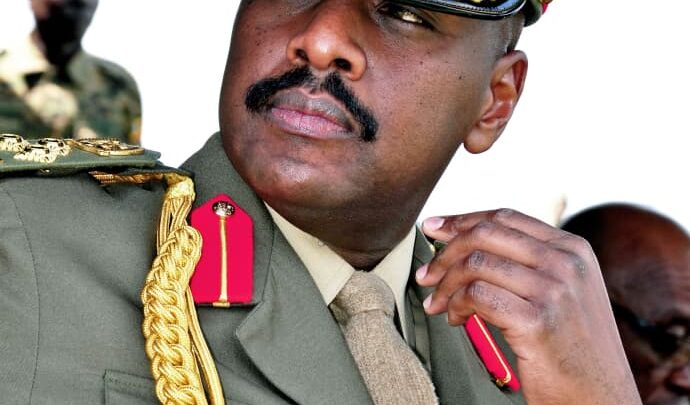
KAMPALA — The declaration came on X, as almost all of his most consequential announcements do. “I will stand for the highest office in the land in 2031. And we will win by the grace of Almighty God.”
Then, a second post: “With my great father, Mzee’s, support I will get 90% in the elections in 2031.”
And a third, which confirmed what many Ugandans had suspected but few had expected to see stated so boldly: “Mzee will be my campaign manager.”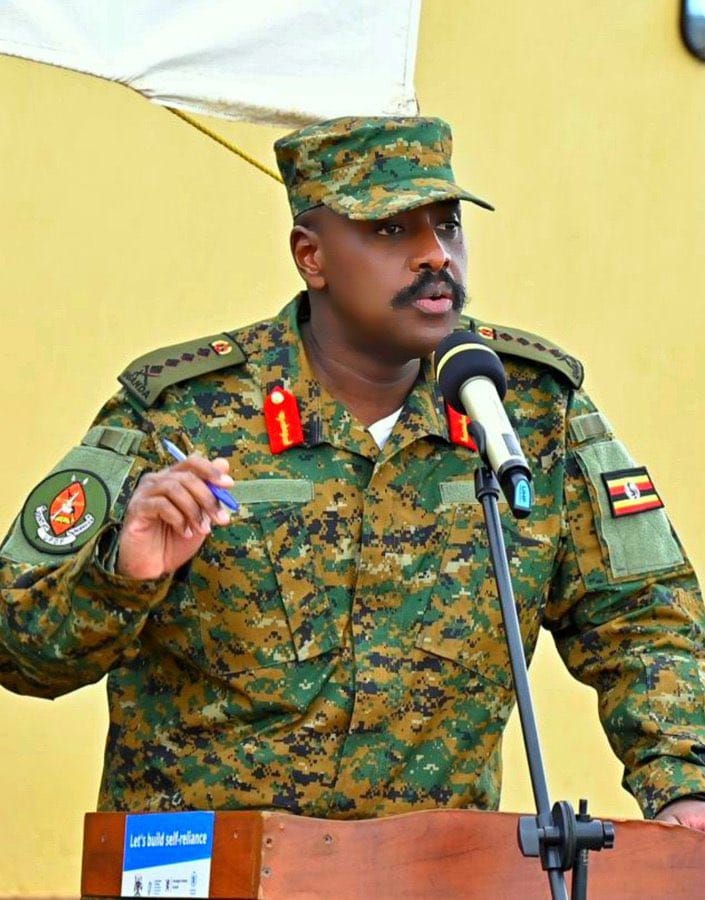
In three posts on August 25, 2026, General Muhoozi Kainerugaba — Chief of Defence Forces, senior presidential advisor on Special Operations, chairman of the Patriotic League of Uganda and eldest son of President Yoweri Kaguta Museveni — transformed what had been years of political speculation into a formal public commitment with a date, a vote-share target and a built-in campaign manager. The posts have been read, debated, shared and dissected across Uganda and East Africa ever since. They mark the most significant public declaration of dynastic intent in Uganda’s post-independence history.
The Long Road to a Formal Declaration
Muhoozi has been a political figure — or at least a figure around whom politics has gathered — for nearly a decade. Born on May 24, 1974, the 52-year-old CDF has built a public persona that defies easy categorisation: military commander, social media provocateur, political mobiliser, football enthusiast, and now, formally and publicly, presidential candidate-in-waiting.
His journey toward this declaration has not been a straight line. In 2023, he publicly announced his intention to contest the 2026 presidential election — a declaration that set Uganda’s political world buzzing and prompted the construction of a nationwide mobilisation network around his candidature, first through the MK Movement and later through the Patriotic League of Uganda, the pressure group he chairs. His supporters organised, collected endorsements, held barazas and positioned him as the natural successor to his father.
Then, in September 2024, he withdrew. He said God had instructed him to concentrate on his military responsibilities. He endorsed President Museveni for another term. Museveni contested the January 2026 election and secured a seventh consecutive term in office — an election marked, according to multiple international observers and Reuters reporting, by an internet shutdown and actions against opposition forces in which Muhoozi played a significant role.
The declaration on August 25, 2026 — less than eight months after his father was sworn in for a seventh term — puts a new and definitive date on an ambition that has never gone away.
The PLU Machine: 25 Million Signatures and Counting
Behind Muhoozi’s personal declaration, an institutional machine has been quietly expanding for years — and it moved into high gear the moment his X posts went public.
The Patriotic League of Uganda, which Muhoozi chairs with PLU national chairman and Kasambya County MP Daudi Kabanda as its operational head, has launched what it describes as a nationwide endorsement campaign targeting 25 million signatures in support of Muhoozi’s 2031 presidential candidature. Kabanda, speaking at a PLU press conference in Nakasero on September 1, 2026, confirmed that Muhoozi had personally instructed him to inform Uganda of his plans — and that the campaign had the sanction of President Museveni himself.
“General MK is not imposing himself on Ugandans,” said Deputy Speaker Thomas Tayebwa, who attended the high-level PLU Nakasero meeting alongside senior government officials, Members of Parliament, business tycoons, cultural leaders, ambassadors and religious leaders. “We are imposing ourselves on him.”
That meeting — its attendee list a who’s who of Uganda’s political, business and cultural establishment — was itself a declaration of institutional weight. Physical endorsement books have already been distributed across PLU’s administrative structures. The post-election baraza held in Kyegegwa marked the resumption of PLU’s grassroots mobilisation after the 2026 election cycle.
The target of 25 million signatures — in a country of approximately 50 million people — is not a modest ambition. It is a statement of intent about the scale of the mandate PLU intends to build for Muhoozi before the 2031 campaign formally begins.
The Constitutional Question No One Is Fully Answering
The most legally complex dimension of Muhoozi’s 2031 bid is one that his supporters have been careful to navigate without directly confronting.
Uganda’s Political Parties and Organisations Act restricts members of the Uganda People’s Defence Forces from participating in political party activities — including holding office in a political organisation, publicly engaging in party political controversy or canvassing for candidates. The Ugandan Constitution describes the UPDF as a nonpartisan institution. As Chief of Defence Forces, Muhoozi is not merely a serving soldier — he is the most senior uniformed officer in the country.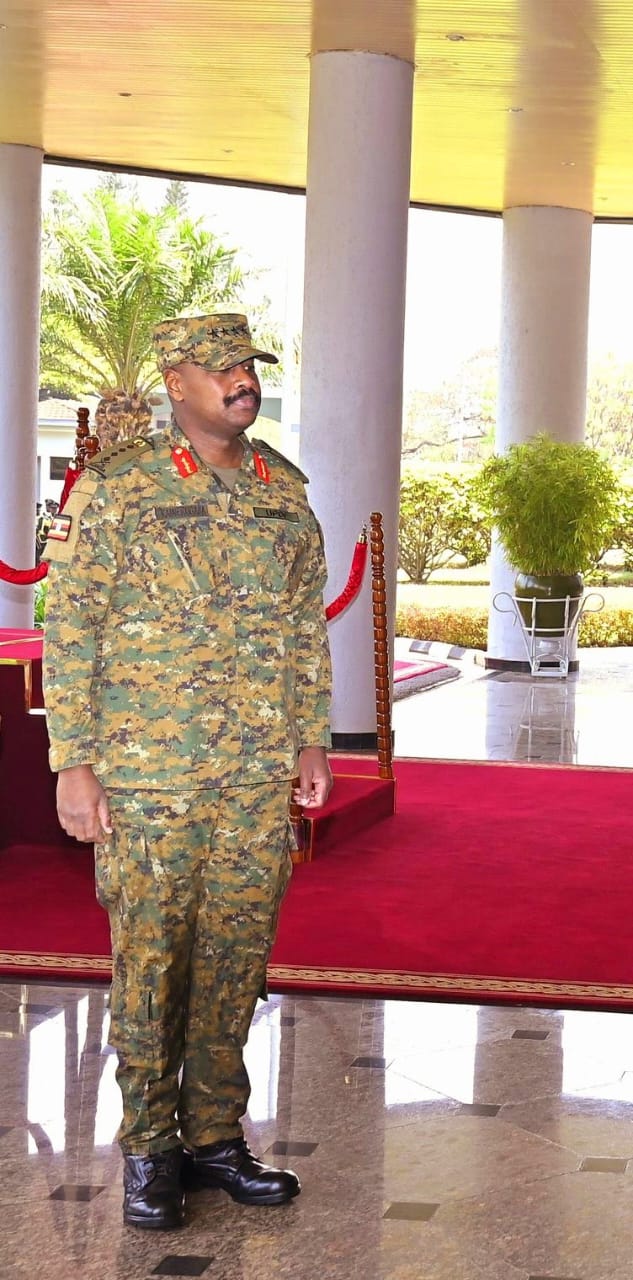
The PLU has attempted to thread this needle with careful language. Kabanda said PLU was “not launching a campaign for General Kainerugaba” — that the endorsement initiative was a people-led effort, not a presidential campaign. The distinction may satisfy some legal interpretations. It has not satisfied Uganda’s constitutional scholars, who note that the CDF’s own X declarations — combined with the institutional endorsement machinery being built around him — are difficult to characterise as anything other than active political campaigning while in uniform.
The question of whether Muhoozi will resign his military commission before formally entering the 2031 race — or whether the political activities of PLU will continue to operate in the grey zone between endorsement and campaigning — is one that neither the PLU nor the government has answered.
The Opposition Landscape: Shattered but Not Silent
Muhoozi’s path to 2031 is being cleared not only by the momentum of PLU’s mobilisation but by the state of the opposition — which, following the January 2026 election, is in its most fragmented and legally constrained position in years.
Dr Kizza Besigye, Uganda’s most enduring opposition figure and four-time presidential candidate, has been held in custody since late 2024 and is facing treason charges at the High Court in Kampala. Robert Kyagulanyi — Bobi Wine — left Uganda for the United States earlier in 2026, saying he feared for his safety. Erias Lukwago, the former Kampala Lord Mayor who served as Besigye’s lead defence counsel, has been held in military detention. Journalist Timothy Kalyegira has been arrested. Analyst Charles Rwomushana was seized from Radio Simba’s studios in September 2026 and his whereabouts remain unknown.
The systematic removal of opposition figures and critics from Uganda’s public life — documented extensively by human rights organisations and international observers — has effectively eliminated the most vocal and organised centres of political resistance. For Muhoozi, that context is as significant as any mobilisation campaign PLU can organise.
What “90% of the Vote” Really Means
Muhoozi’s claim that he will win 90 percent of the vote with his father’s support is not a figure that anyone with knowledge of Ugandan electoral history would regard as literally plausible — but it is not meant to be taken literally. It is a statement of dominance. A signal to potential rivals inside the NRM and outside it that the succession path is not open for bidding. A message that the institutional, military and political machinery that has kept Museveni in power since 1986 will be deployed in support of his son in 2031.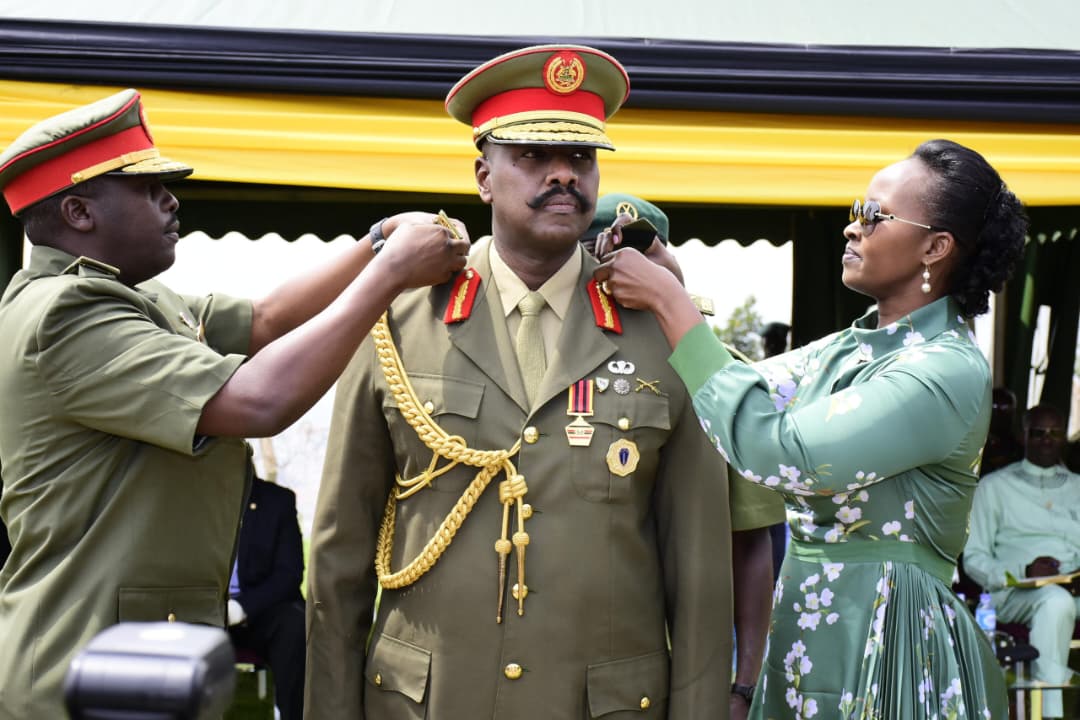
Whether that machinery can deliver for Muhoozi what it has delivered for his father is a separate and genuinely open question. Museveni built his political dominance over four decades, through the liberation war of 1981-86, through the construction of the NRM as a mass movement, through successive elections and through the careful management of regional, ethnic and economic constituencies that have kept the coalition around him intact. Muhoozi inherits the infrastructure of that dominance — but not necessarily the loyalty that his father earned through it.
The 2031 election is five years away. President Museveni’s own plans beyond his current term remain publicly unconfirmed — government spokesman Alan Kasujja told Reuters only that Museveni and the NRM would decide “when the time comes.” Whether Uganda’s 81-year-old president intends to step aside in favour of his son, contest a remarkable eighth term, or allow the succession to play out through NRM internal processes is the defining political uncertainty of the next five years.
What August 25, 2026 made clear is that Muhoozi is no longer waiting for that uncertainty to resolve itself. He has put his name on the ballot — in public, with a date, with a target, and with his father named as his campaign manager.
Uganda’s long-running succession question has a new chapter. Whether it ends in State House for Muhoozi Kainerugaba will depend on five years of politics that have barely begun.
SOURCE DAILYMONITOR