Local News
Identity Crisis: NIRA Holds 5.4 Million Uncollected IDs While Running Out of Staff to Deliver Them
Identity Crisis: NIRA Holds 5.4 Million Uncollected IDs While Running Out of Staff to Deliver Them


KAMPALA — The institution charged with defining the identity of every Ugandan is itself in the grip of an identity crisis.
The National Identification and Registration Authority — NIRA — is sitting on approximately 5.4 million newly printed national identity cards that have not been collected by their owners, has 153 unfilled positions out of an approved establishment of 571, is running a funding shortfall of Shs256.8 billion, and is now led by no confirmed executive director after the contract of Rosemary Kisembo expired in May 2026 without renewal.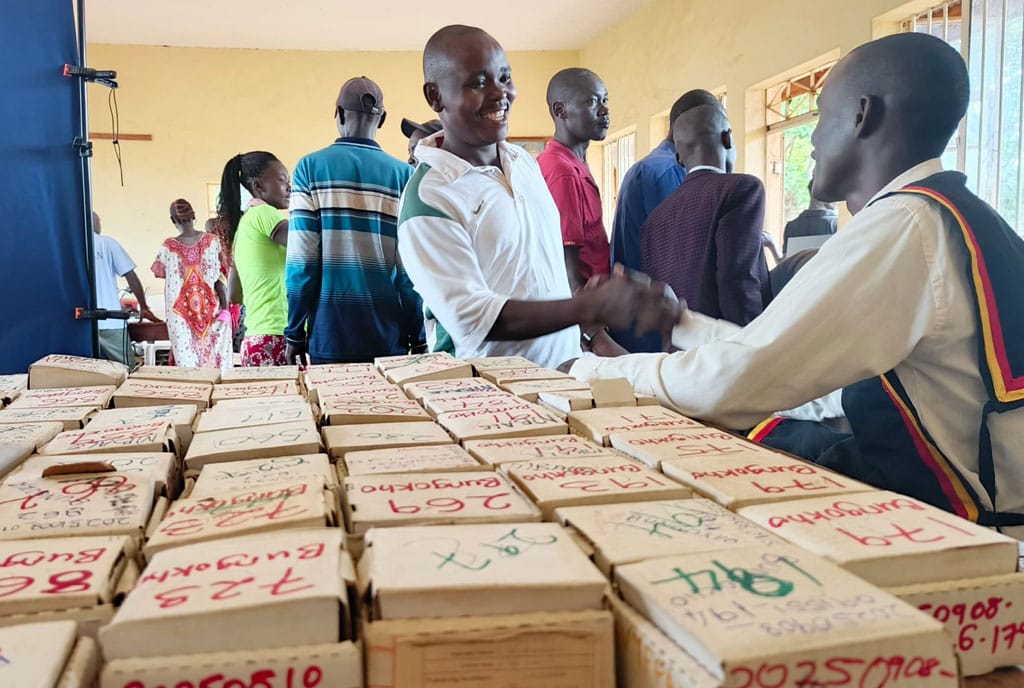
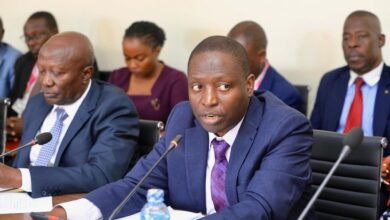
Appearing before the Parliamentary Committee on Commissions, Statutory Authorities and State Enterprises — COSASE — Kisembo laid out the scale of the crisis in terms that left lawmakers with little room for comfort. “The authority’s existing workforce is insufficient for the scale of its statutory responsibilities,” she told the committee. “The workload vis-à-vis the staffing structure does not match.”
The Numbers That Tell the Story
Of the 5.4 million printed cards sitting uncollected, the problem is not simply one of citizen negligence. NIRA has printed approximately 15.4 million new identity cards under its mass enrolment and renewal exercise — which launched on May 27, 2025, at a projected cost of Shs666.85 billion, with a mandate to renew 15.8 million expiring IDs and register 17.2 million new citizens. Of those 15.4 million cards, only about 10 million have been successfully issued and collected. The remaining 5.4 million are gathering dust in NIRA’s custody.
The reasons are systemic. Citizens receive SMS alerts telling them their ID is ready — and then arrive at collection points to be told it is not available. Collection points relocate without adequate public notice, forcing applicants to make multiple journeys across districts. In Kampala’s Lukuli-Makindye offices, one citizen told Daily Monitor he had received a collection message in January and made repeated trips over several months without success. Across the country, the experience is similar: confusion, abrupt relocations, unclear communication and, in some cases, demands for unofficial payments before cards are handed over — a corruption pattern that NIRA’s own spokespersons have acknowledged while lamenting that victims rarely follow up through official channels, making investigations difficult.
The Staffing Collapse
The core problem is people — or rather, the absence of them.
NIRA’s mass enrolment exercise was designed around a temporary workforce of 13,787 workers deployed across the country to manage enrolment, biometric capture, printing logistics and card distribution. At its peak, only 9,809 of those temporary staff were actually deployed — a shortfall of nearly 4,000 workers from the beginning. That temporary workforce has since wound down, leaving NIRA with its permanent establishment of 418 filled positions out of 571 approved — a 26 percent vacancy rate across the institution.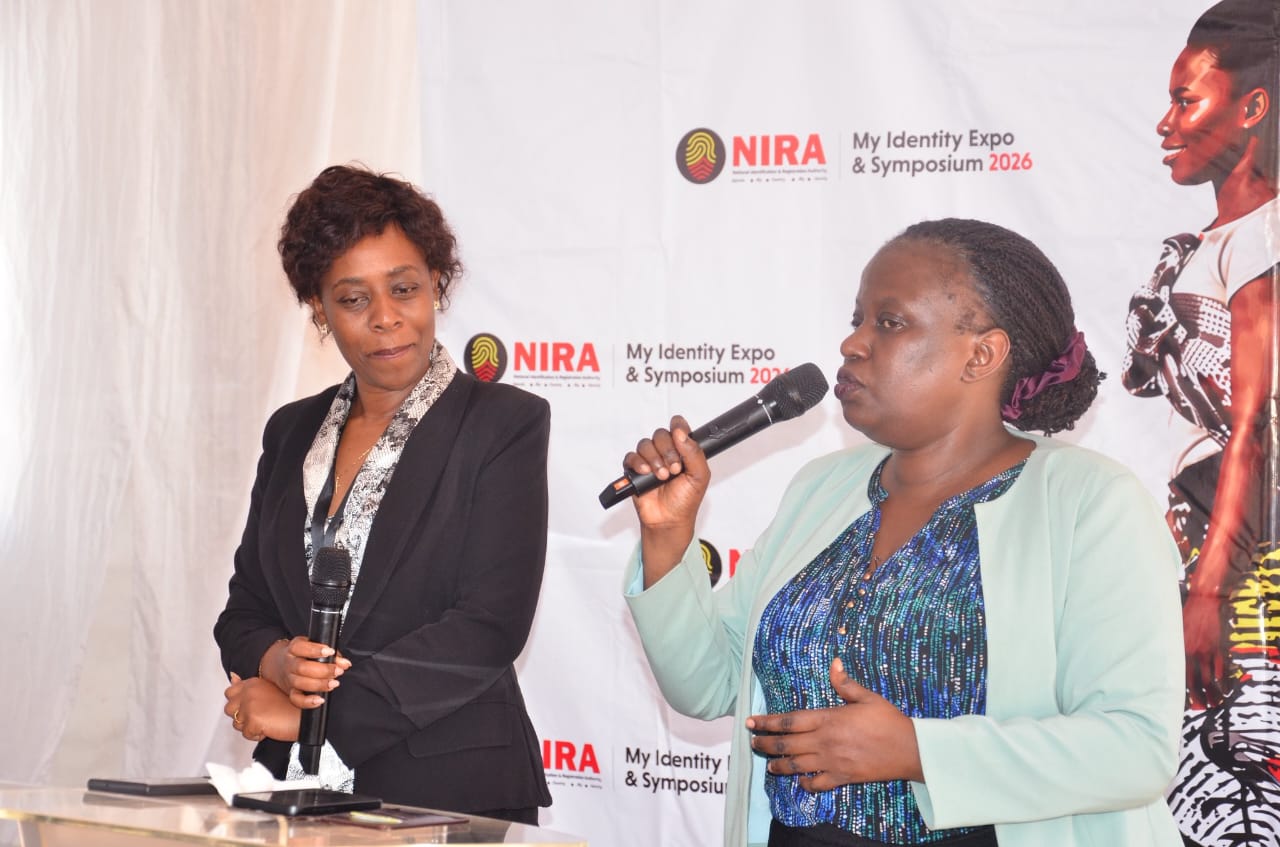
The distribution of those vacancies is not random. It is concentrated exactly where it hurts most. Internal Audit is running at a 67 percent staffing deficit. Client-facing positions — the staff actually handing cards to citizens — number just 201 at NIRA headquarters according to one set of figures, and 297 according to another set cited by NIRA spokesperson Clare Ollama in May 2026. On the ground, each staff member is serving an average of 235 citizens per day. The maths of that ratio — 201 to 297 staff processing hundreds of thousands of uncollected cards — is unsustainable.
Kisembo told COSASE directly: the temporary workforce that made the mass exercise possible has expired. The permanent workforce is too small to absorb the remaining work. And NIRA does not have the budget to hire the staff it needs to close the gap.
The Money Problem
Behind the staffing crisis lies a funding crisis that the Auditor General’s office has documented in clinical detail.
Of the Shs666.85 billion budgeted over three years for the mass enrolment exercise, only Shs410.05 billion was actually released by the Treasury — a shortfall of Shs256.8 billion, or 38 percent of the total budget. Even the money that was released was not fully utilised: Shs15.24 billion was left unspent in the 2024/2025 financial year alone — a finding that points to procurement and planning weaknesses sitting alongside the funding gap. The Auditor General’s report, which also flagged weak asset management, poor civil registration systems and procurement shortcomings, provides the institutional backdrop to what citizens experience on the ground as chaos.
Parliament Watch reported in September 2025 — before the bulk of the mass exercise had concluded — that NIRA’s available funds would only sustain operations until October, potentially leaving at least five million Ugandans without access to ID services if additional funds were not released. Those warnings went partially unheeded.
The Leadership Vacuum
Compounding all of the above is a leadership crisis that COSASE members pressed Kisembo on directly. Her five-year contract as Executive Director expired in May 2026. She has not been reappointed. She has not been replaced. NIRA is being led in an acting capacity at the precise moment it faces its most complex operational and accountability challenges.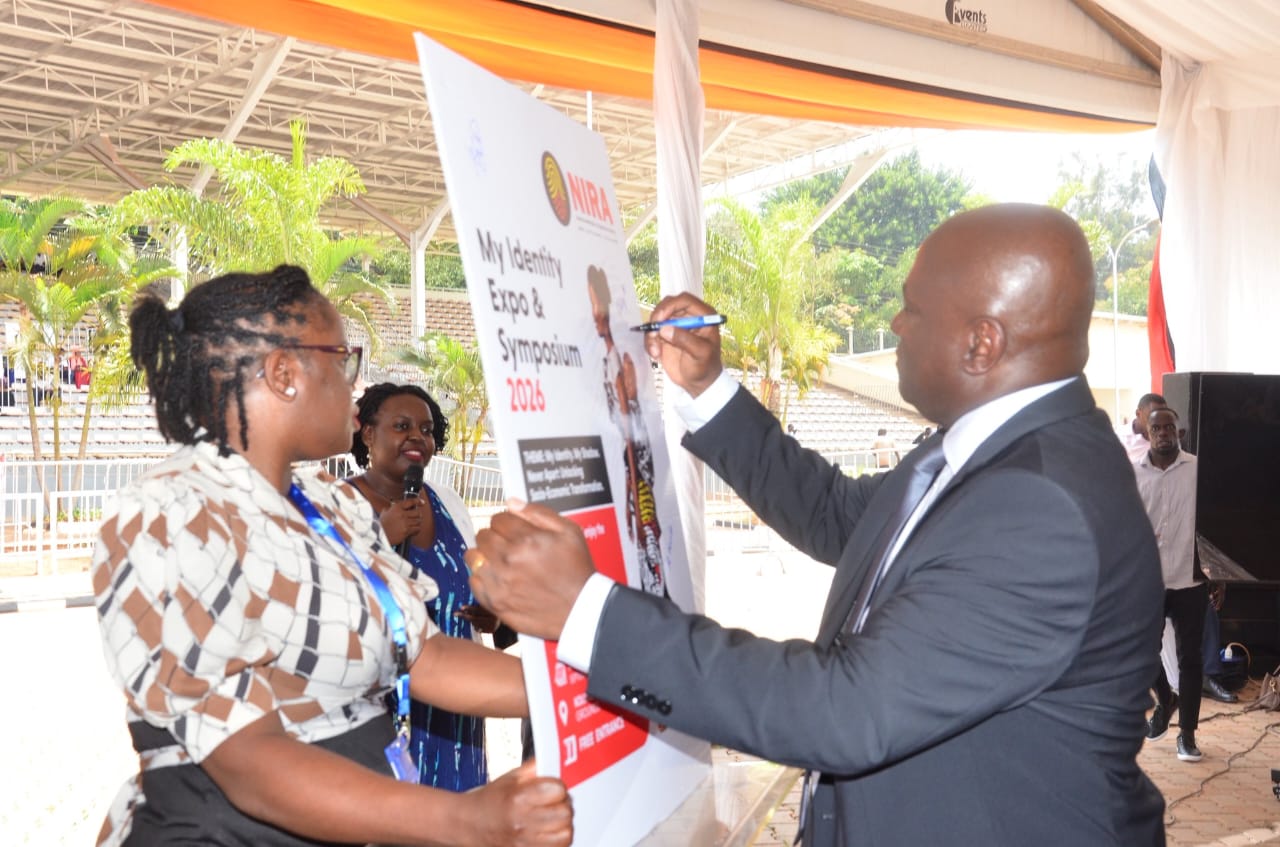
The 2024 amendments to the Registration of Persons Act expanded NIRA’s mandate significantly — the authority now handles all marriage registration, inheriting approximately 1.2 million physical marriage records from the Uganda Registration Services Bureau, and has migrated those records onto a new digital system. The agency now registers civil, church, customary, Hindu and Muslim marriages. With 10.9 million people still unregistered and approximately six million on the existing register yet to renew their expiring cards, NIRA’s mandate has never been larger — and its institutional capacity has rarely been more strained.
What It Means for Ugandans
A national ID in Uganda is not a bureaucratic convenience. It is the gateway to banking, mobile money, land registration, education, healthcare access, social protection programmes, voting and, increasingly, interaction with the digital economy. The 5.4 million Ugandans whose cards sit uncollected in NIRA’s offices are not merely inconvenienced. They are locked out.
The broader registration shortfall — 10.9 million citizens still unregistered — compounds the exclusion further. In a country of 50 million people moving rapidly toward a digital services model, an identity authority in institutional crisis is not a bureaucratic problem. It is a social and economic emergency dressed up in administrative language.
COSASE members left the hearing with a long list of questions. NIRA left it with a longer list of problems.
SOURCE DAILYMONITOR