HealthLocal News
Uganda Declares Itself Ebola-Free: How a Nation Defeated a Deadly Outbreak in 74 Days
Uganda Declares Itself Ebola-Free: How a Nation Defeated a Deadly Outbreak in 74 Days

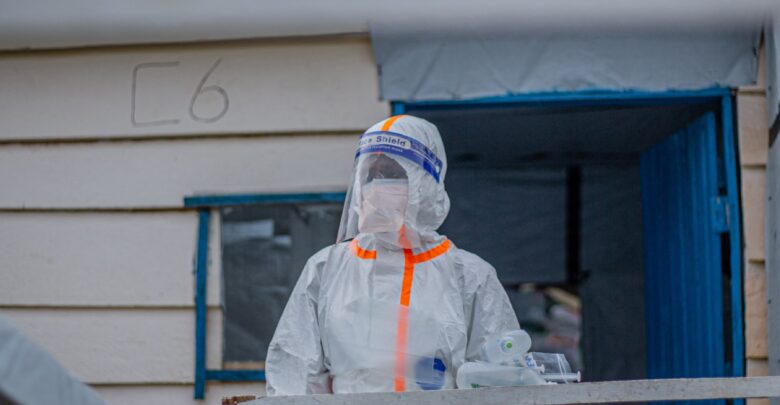
KAMPALA — It began with a single patient crossing from the Democratic Republic of Congo. It ended on Tuesday, July 28, 2026, with Health Minister Dr Chris Baryomunsi standing before a nation and declaring Uganda officially free of Ebola — 74 days after the outbreak was first confirmed, and exactly 42 days after the last Ugandan patient was discharged from care.
“Throughout this period the Ministry of Health maintained intensive surveillance nationwide and no new Ebola cases have been detected,” Baryomunsi said in his official declaration. The announcement, which follows the successful completion of the World Health Organisation’s mandatory 42-day monitoring period, marks the end of Uganda’s most recent battle with one of the world’s most feared diseases — and a textbook demonstration of how to stop it.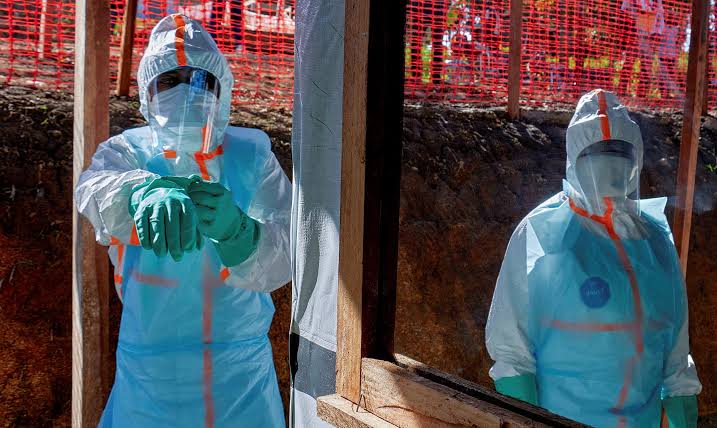
**How the Outbreak Began**
Uganda declared the Bundibugyo Ebola Virus Disease outbreak on May 15, 2026, after a patient who had travelled from the DRC’s Ituri Province tested positive for the rare Bundibugyo strain of the virus — a variant distinct from the more commonly known Zaire strain that has driven most of the DRC’s recent outbreaks. Over the 37 days that followed, the virus infected 20 people. Of the 20 confirmed cases, 15 were directly imported from the DRC — individuals who had contracted the virus across the border before entering Uganda. Only five cases were locally acquired within Uganda itself, a figure that reflects the speed and effectiveness of the country’s containment response. Eighteen patients recovered and were discharged. Two died — both of whom were Congolese nationals.
The last confirmed case in Uganda was reported on June 21, 2026. The last patient — a Congolese national who had sought treatment in Uganda after developing symptoms consistent with Ebola while still in the DRC — was discharged from the Mulago National Referral Isolation Centre in Kampala on July 16, 2026, in a ceremony presided over by Baryomunsi himself. The minister presented the survivor with an official Ebola discharge certificate confirming he no longer posed a risk of transmission, and Uganda entered its final 42-day countdown to today’s declaration.
**The 42-Day Standard — and a Technical Note**
The 42-day countdown is not a bureaucratic formality. It is calibrated to exactly double the maximum incubation period for Bundibugyo virus disease — which can take up to 21 days from exposure to the appearance of first symptoms. By requiring that two full maximum incubation periods pass without a new case, the WHO standard ensures that any individual exposed to the virus during the final days of active transmission has had sufficient time to either develop and be detected, or remain clear.
In declaring the outbreak over, Baryomunsi clarified a nuance that had drawn some attention in the days preceding the announcement. The 42-day countdown was calculated from June 16 — the date the last locally transmitted Ugandan national patient was discharged — rather than from June 22, the date the final Congolese patient left care. The minister confirmed that this approach was consistent with WHO guidelines and that the mandatory surveillance period had been successfully and rigorously completed.
**Uganda’s Response: What the Numbers Say**
The speed and containment of Uganda’s outbreak response has drawn widespread commendation from the global public health community. Of 20 total cases, only five were acquired locally inside Uganda — meaning the country’s rapid identification, isolation and contact tracing systems successfully prevented the virus from establishing significant community transmission in a country whose geography, cross-border movement patterns and tropical forest ecology make it inherently vulnerable.
The government deployed a multi-layered response that included border screening at all crossings with the DRC, community surveillance networks in high-risk districts, enhanced isolation facilities at Mulago National Referral Hospital, intensive contact tracing for every confirmed and suspected case, and cross-border coordination with DRC health authorities and WHO teams. International partners including the WHO Africa Regional Office, the Africa CDC, USAID and MSF provided technical and logistical support.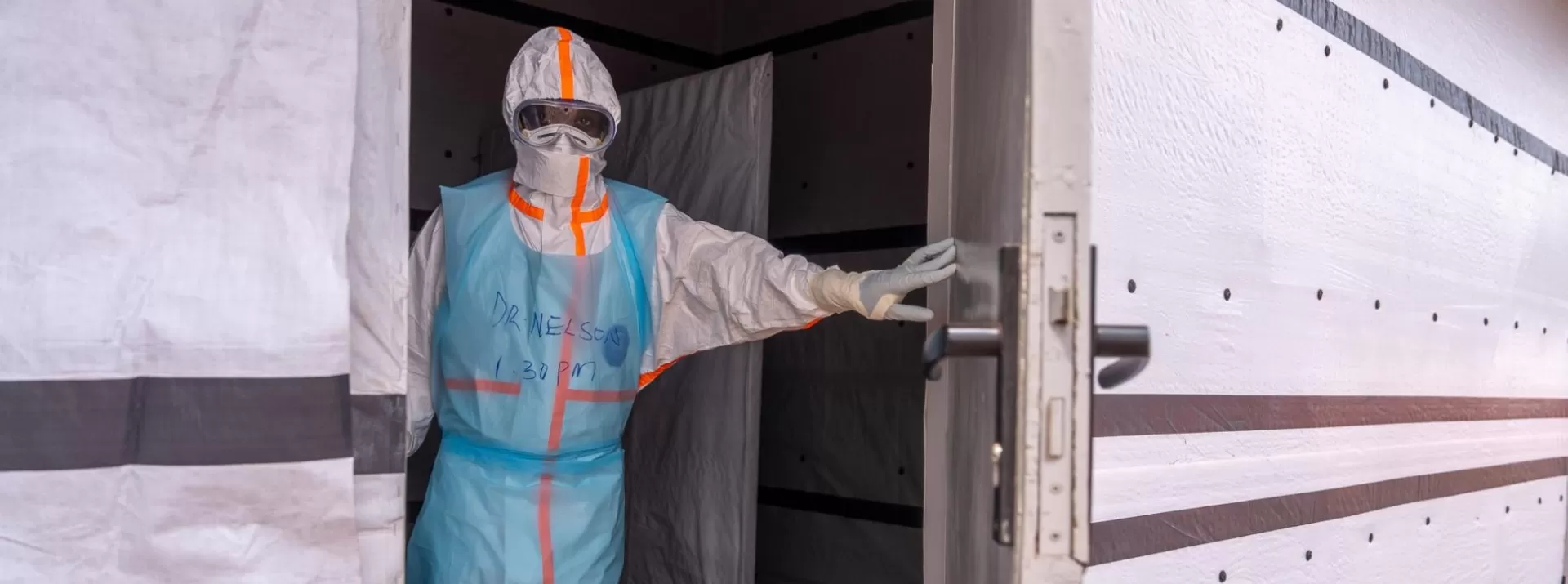
Health workers at Mulago’s isolation centre — who treated the most severe cases under full personal protective equipment in demanding conditions — were cited specifically by the minister as central to the response’s success. “This achievement belongs to our health workers, technical teams, partners and the people of Uganda who worked together to stop the spread of the disease,” Baryomunsi said at the July 16 discharge ceremony. “It shows us that Ebola can be defeated when we remain vigilant, adhere to public health measures and invest in strong health systems.”
**The Shadow Over the Border**
Tuesday’s declaration of Uganda as Ebola-free carries an asterisk that no celebration can fully erase. The DRC — from which all 15 of Uganda’s imported cases originated — remains in the grip of an active and worsening outbreak. As of the latest WHO figures, the DRC has recorded more than 2,073 confirmed cases, with WHO indicating that the true figure may be at least double that number, given the remote and conflict-affected areas where transmission continues. The outbreak has also thrown imported cases well beyond East Africa — a US citizen was medically evacuated to Germany in May 2026 after contracting the virus, and France reported an imported case on June 24.
Uganda shares a long, porous and heavily trafficked border with the DRC, through which communities, traders, families and patients move daily. Officials say cross-border surveillance and operational readiness at all border crossing points will be maintained at heightened levels indefinitely. The country’s many tropical forests, which teem with fruit bats — the natural reservoir host of the Bundibugyo virus — mean that the risk of future introductions remains permanently present.
**A Nation That Has Done This Before**
Uganda’s success in containing the 2026 outbreak is not accidental. It is the product of hard-won institutional experience accumulated across multiple previous Ebola events. Uganda has survived outbreaks of Sudan Ebola virus in 2000, 2011 and 2022, and of the Bundibugyo strain in 2007 — each time developing faster, more coordinated response systems. That experience, embedded in the Ministry of Health’s emergency operations protocols and in the institutional memory of Uganda’s public health workforce, is what allowed the country to move quickly enough in May 2026 to prevent what could have been a far larger crisis.
For a country too often in the news for what its health system cannot provide — overcrowded wards, absent medicines, patients on floors — Tuesday’s Ebola-free declaration is a reminder of what Uganda’s health workers and disease surveillance systems are capable of when they are resourced, coordinated and given the tools to act.
Seventy-four days after the outbreak began, Uganda is Ebola-free.
SOURCE NILEPOST