BusinessInternational News
No Recognition, No Deal: Trump Throws Saudi Nuclear Agreement Into Doubt by Demanding Israel Normalisation
No Recognition, No Deal: Trump Throws Saudi Nuclear Agreement Into Doubt by Demanding Israel Normalisation

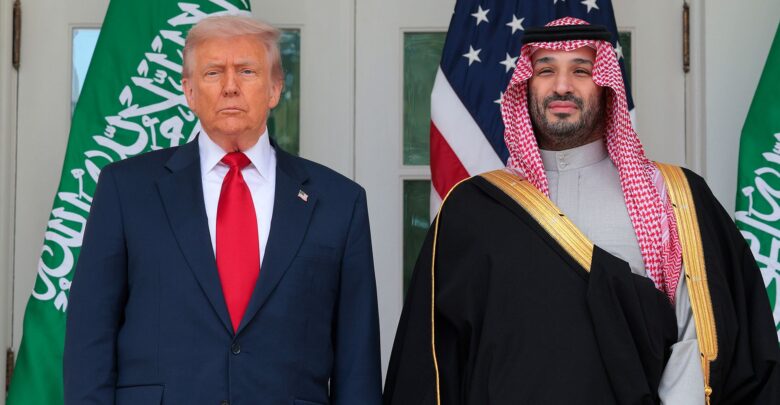
WASHINGTON — President Donald Trump has blindsided diplomats and thrown the future of a landmark civil nuclear agreement with Saudi Arabia into immediate uncertainty, announcing on Thursday that the deal — signed just one day earlier — is “totally subject” to Saudi Arabia formally recognising Israel through the Abraham Accords.
The announcement, made in a Truth Social post on Thursday, July 23, 2026, directly contradicts multiple reports published this week — based on sources with direct knowledge of the agreement’s terms — that the nuclear deal had been deliberately de-linked from the question of Israeli recognition. It has plunged the fate of the agreement into confusion and placed Riyadh in an extraordinarily difficult diplomatic position.
**The Deal and the Condition**
US Energy Secretary Chris Wright and Saudi Energy Minister Prince Abdulaziz bin Salman signed the civil nuclear cooperation agreement on Wednesday, along with a bilateral nuclear safeguards accord — the legal framework governing how the United States would support the development of Saudi Arabia’s civilian nuclear energy programme. The 30-year agreement, which involves US companies in the programme’s development, would give Saudi Arabia access to American nuclear technology for energy generation.
Trump’s post on Thursday framed the deal’s fate in unambiguous terms. The agreement “will be approved, but is totally subject to Saudi Arabia joining the very respected and successful Abraham Accords,” he wrote. In a separate post, he went further: “There will be no enrichment of material!” — clarifying that the deal explicitly prohibits Saudi Arabia from enriching uranium on its own soil, addressing a central non-proliferation concern that has shadowed the negotiations for years.
White House press secretary Karoline Leavitt subsequently confirmed the condition in explicit terms, telling reporters: “This deal with Saudi Arabia is contingent on this condition as far as the president is concerned. The deal is off if the Saudis do not join the Abraham Accords. We will continue to talk with our Saudi counterparts to get the deal finalised and hopefully see them join the Abraham Accords very soon.”
**Why This Condition Is So Explosive**
Saudi Arabia has not recognised Israel. It has never been a member of the Abraham Accords — the diplomatic framework Trump brokered during his first term, under which the United Arab Emirates, Bahrain, Morocco and Sudan established formal relations with Israel. Saudi Arabia has long maintained, publicly and consistently, an absolute condition of its own: it will not recognise Israel without a clear and credible pathway to an independent Palestinian state. That position was reaffirmed as recently as this year and has not shifted.
Israeli Prime Minister Benjamin Netanyahu, for his part, has repeatedly dismissed the idea of Palestinian statehood — making the gap between what Riyadh demands and what Jerusalem is prepared to offer as wide as it has ever been.
Trump’s announcement therefore places Saudi Arabia before a choice it has explicitly said it cannot make: join the Abraham Accords now, without a Palestinian state, or lose the American nuclear technology it has sought for years. Saudi Arabia did not immediately respond to the condition on Thursday. The White House has not released the full text of the nuclear agreement.
**A Deal Contradicted by Its Own Reports**
The timing and nature of Trump’s announcement has added an additional layer of diplomatic confusion. Multiple credible outlets reported this week, based on sources with direct knowledge of the agreement, that the nuclear deal had been explicitly de-linked from the Israeli recognition question — that the Trump administration had made a deliberate strategic decision to separate the two issues in order to allow the nuclear cooperation framework to proceed independently. Reuters had previously reported the de-linking as a significant diplomatic shift.
Trump’s Truth Social post effectively reversed that position publicly within 24 hours of the deal being signed, leaving US negotiators, Saudi counterparts and international observers scrambling to understand what the agreement’s actual terms are — and who has the authority to define them.
Congress now has 90 in-session days to review the nuclear cooperation agreement. It requires a two-thirds majority in both the House and Senate to be blocked — a threshold that makes its legislative passage almost certain regardless of the Israeli recognition condition. But Congressional approval of the technical agreement is a separate question from whether Saudi Arabia will ultimately accept the political condition Trump has now publicly attached to it.
**The Broader Middle East Context**
Trump’s announcement lands in one of the most volatile Middle Eastern moments in decades. The United States has been engaged in a direct military conflict with Iran since late February, having launched Operation Epic Fury — a campaign of strikes on Iranian nuclear, military and naval infrastructure, in coordination with Israel. Iran’s Supreme Leader Ayatollah Ali Khamenei was killed in the opening strikes. Iran has retaliated by striking US bases, Gulf state allies and regional shipping. Saudi Arabia, which hosts major US military assets, has been among the Gulf states that refused to allow the United States to launch strikes on Iran from its territory — a tension that has strained the US-Saudi relationship throughout the conflict.
The nuclear deal represents one of the central economic and strategic prizes Saudi Arabia has sought from Washington for years — American technology, American expertise and a 30-year framework for developing the kingdom’s energy future beyond oil. Trump’s ability to attach a condition to it that Riyadh has repeatedly said it cannot meet — and to do so the day after it was signed — reflects both the extraordinary leverage Washington holds and the extraordinary risk that leverage, deployed so abruptly, now threatens to destabilise.
Palestinian statehood. Iranian nuclear ambitions. Abraham Accords expansion. Saudi energy independence. A 30-year nuclear deal. All of it now hangs on a Truth Social post — and on what Saudi Arabia decides to say next.
SOURCE BBC NEWS