International News
Europe Burns: More Than 300,000 Flee as Wildfires Swallow Spain and France and Leaders Call Crisis Summits
Europe Burns: More Than 300,000 Flee as Wildfires Swallow Spain and France and Leaders Call Crisis Summits

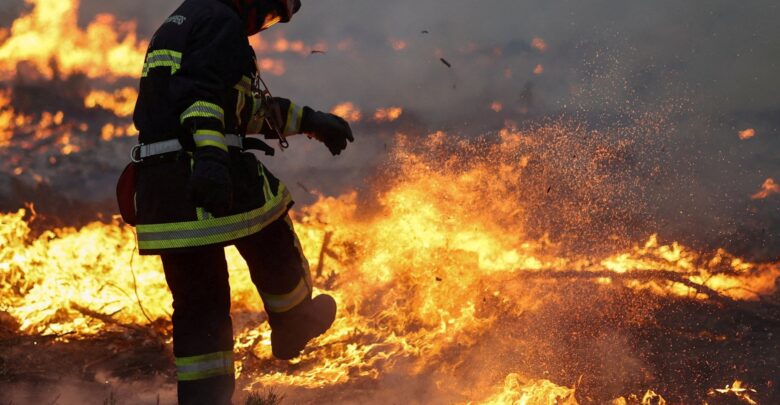
MADRID / BORDEAUX — The sky above western Madrid turned black on Saturday morning. In the Gironde region of southwestern France, emergency alert messages fired to every mobile phone in five towns simultaneously, ordering residents to run toward Bordeaux. In the Spanish town of Navas del Rey — a municipality of 3,400 people — authorities evacuated every single resident and sealed the town off until further notice.
Europe is on fire. And the worst may still be coming.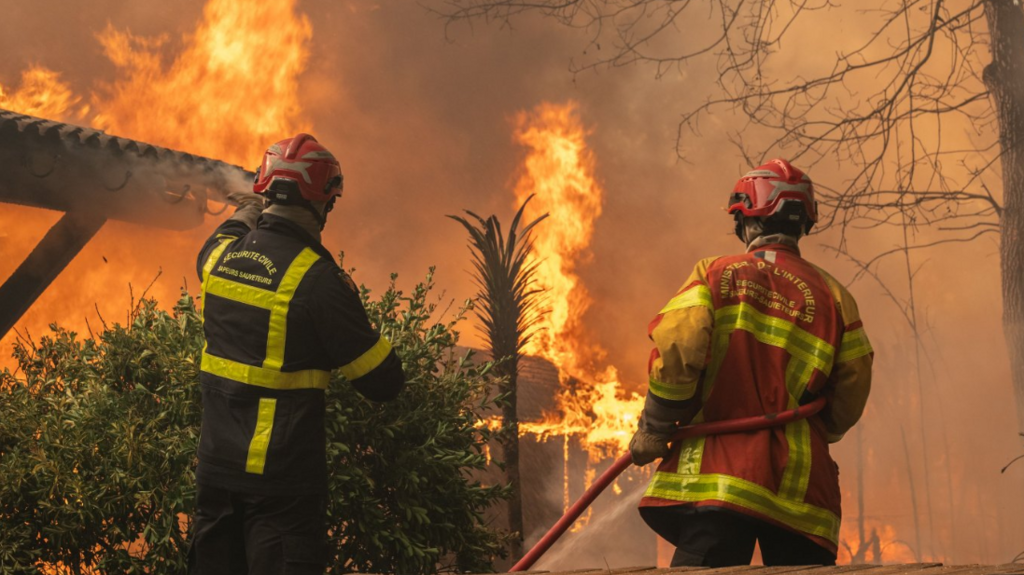
More than 300,000 people have now been displaced by simultaneous wildfires raging across Spain and France — one of the largest mass evacuations in European history — as leaders on both sides of the Pyrenees convened crisis meetings and meteorologists warned of a third consecutive heatwave bearing down on a continent already reduced to tinder.
**The Fires: What Is Burning and Where**
In Spain, the crisis is centred in the Madrid region and the neighbouring province of Ávila, where wildfires ignited on Thursday and have since consumed nearly 10,000 hectares in the Madrid region alone — and between 13,000 and 15,000 hectares in Ávila. Carlos Novillo, the Madrid regional government’s emergency management chief, delivered a stark assessment on Saturday: the wildfire near the capital was “at its peak and is currently beyond the capacity of firefighters to contain.” Erratic winds, he warned, threatened to fan the flames further at any moment.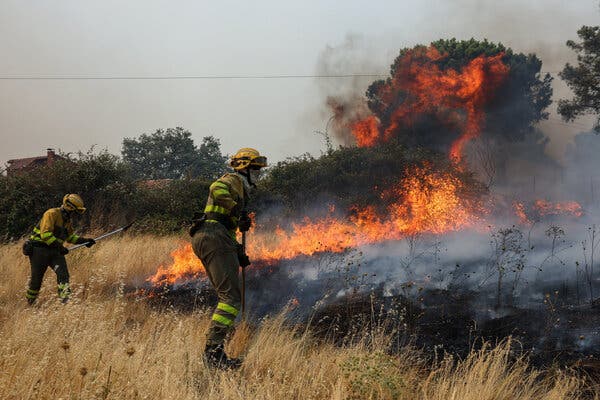
The town of Navas del Rey stands as the crisis’s most haunting image: a community of 3,400 people evacuated entirely, its streets deserted, its entrance marked by charred shrubs and blackened earth where fire swept through on Friday. Residents who spoke to CNN described towns that had felt like oases — mountain communities shaped over generations — being consumed in hours.
In France, the epicentre is Gironde and its neighbouring department of Landes in the southwest, where fires began on Wednesday and have since burned approximately 42,000 hectares — nearly 104,000 acres — in what French broadcaster France 24 described as one of the largest evacuations in France’s modern history. At the height of Saturday’s crisis, roughly 30 fires were burning simultaneously across southwestern France, with thousands of personnel deployed on the ground. French Interior Minister Laurent Nuñez confirmed that around 50,000 people were evacuated from the Gironde region overnight into Sunday alone, bringing the total displaced in France to more than 250,000. Across the two countries, the combined figure has now exceeded 300,000.
Several French villages have been reduced to ghost towns. Evacuees carrying pets, family photographs and whatever they could grab were photographed sheltering at the Parc des Expositions in Bordeaux, the closest major city to the worst of the French fires.
**The Leaders: Crisis Meetings on Both Sides of the Pyrenees**
Spanish Prime Minister Pedro Sánchez issued his gravest public warning yet on Saturday, cautioning citizens of “complex hours” ahead as firefighting crews raced against deteriorating conditions. Sánchez announced plans to visit areas hit by fires in Valencia in eastern Spain, where separate blazes are burning alongside the Madrid and Ávila crisis. The Spanish government has deployed 2,737 personnel, 426 ground vehicles and 21 aircraft to combat the fires — joined by emergency crews from Greece, Italy and Portugal in a show of European solidarity.
In France, President Emmanuel Macron announced a crisis cabinet meeting for Monday — an extraordinary convening of the government to coordinate the national response to what French officials have described as an unprecedented emergency. Macron had earlier taken to social media to address the nation, confirming the scale of the disaster and pledging that all resources available to the French state would be brought to bear on containing the blazes.
**The Heat: What Is Coming**
What makes the situation so dangerous is not only what is burning now — it is what meteorologists say is coming next. Temperatures across the hardest-hit areas of Spain and France are expected to soar again this week, with no significant rainfall in the forecast. The continent has already endured three consecutive heatwaves this summer, each one drying out the landscape further, killing moisture in the soil and in the vegetation, and turning forests and scrubland into conditions that fire scientists describe as a tinderbox.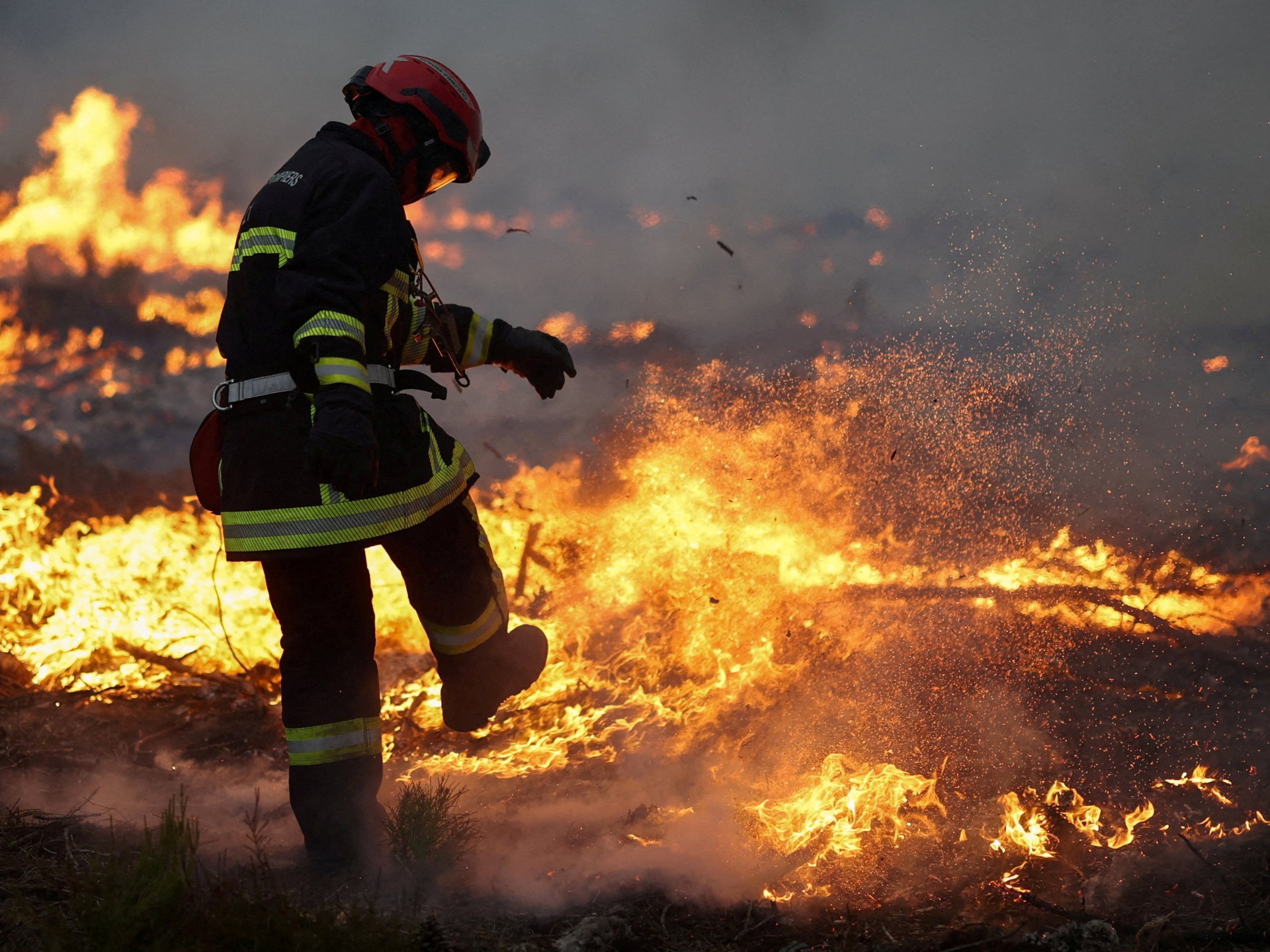
Jan Doerr, a wildfire expert who spoke to CNBC, explained the cascading dynamic that has turned 2026 into a historic fire season: “What is so unusual, really, is that we’ve now had the third consecutive heatwave that really dried out the landscape, and that means once we have an ignition, that can really escalate into a very severe fire.” The fires burning in Gironde began from a single ignition point on Wednesday. Within 72 hours they had displaced more than 167,000 people.
**The Climate: A Crisis Within a Crisis**
Scientists and emergency managers have been explicit about the underlying driver of what Europe is experiencing in the summer of 2026. Climate change is making heatwaves more frequent, more intense and longer in duration — and it is making the fire conditions that follow them more extreme. Europe is experiencing more wildfires than normal this summer, and the cumulative effect of three heatwaves in rapid succession has left the landscape of southwestern France and central Spain in conditions that make catastrophic fire almost inevitable once any spark is introduced.
The 2026 fires are not a surprise to climate researchers. They are the continuation of a trend that has been accelerating for over a decade — and one that European governments have acknowledged in policy frameworks but not yet matched with sufficient investment in fire prevention, forest management and emergency response capacity for an era of chronic, escalating fire risk.
For the families sheltering in Bordeaux’s exhibition halls, for the residents of Navas del Rey staring at charred roadside shrubs on television, for the hundreds of thousands of people who have fled their homes in the last four days — those policy debates are for later.
Right now, Europe is waiting to see what the wind does next.
SOURCE BBC NEWS