BusinessEnvironmentLocal News
From Churchill’s Pen to the Trading Screen: How Uganda Arrived at ‘Pearl Sweet’ — and Why the Name Matters
From Churchill's Pen to the Trading Screen: How Uganda Arrived at 'Pearl Sweet' — and Why the Name Matters


KINGFISHER DEVELOPMENT AREA, KIKUUBE — It began with a 19th-century British imperialist, a journey through East Africa, and a description so vivid it has never left. On Wednesday, September 2, 2026, nearly 120 years after Winston Churchill called Uganda “the pearl of Africa,” President Yoweri Museveni picked up a pen at the Kingfisher oilfield on the shores of Lake Albert and put those words to work again — this time not in a travel memoir but on an international crude oil trading document.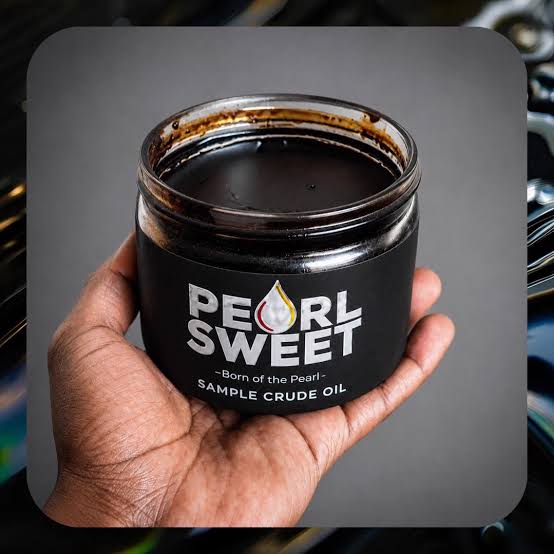
Uganda’s oil will be called Pearl Sweet. And the name, deliberately and carefully chosen, carries more meaning than it might first appear.
**WHY A CRUDE OIL NEEDS A NAME**
Before anything else, a piece of petroleum economics that explains why Wednesday’s ceremony mattered as much as it did.
A crude oil cannot be traded on international markets until it has a formal, registered name. International crude oils — Brent, WTI, Dubai, Bonny Light, Jubilee, Sangomar — are bought and sold by traders, refineries, shipping companies and price-reporting agencies as identifiable grades. Each name signals to the market who produced it, where it came from and, critically, what its quality characteristics are. Without a name, Uganda’s oil could not appear on cargo documentation, refinery specifications or international trading databases. It could not be quoted or priced. It could not be sold.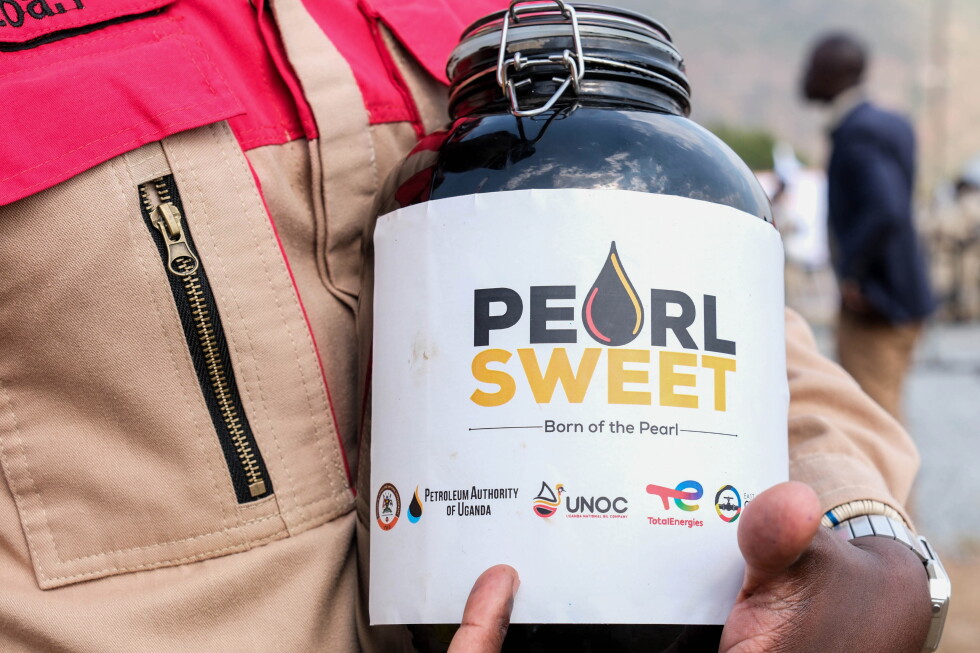
“A crude grade cannot be quoted on trading screens or sold to refineries until it carries a name and a published assay setting out its density, sulphur content and refining yield,” The Independent Uganda explained in its reporting on Wednesday’s ceremony. The naming of Pearl Sweet is, therefore, among the final formal steps before Uganda becomes a commercial oil exporter — a milestone nearly two decades in the making since commercial oil reserves were first confirmed in the Albertine Graben in 2006.
First oil is now expected by late 2026, with production anticipated as early as November.
**THE STORY BEHIND ‘PEARL’**
Winston Churchill visited Uganda in 1907, a decade after the British Protectorate was established. Travelling through what he described as an astonishing country, he was struck by the richness of its landscape, its biodiversity, its fertile soils and the extraordinary beauty of its lakes, forests and mountains. In his resulting 1908 book, My African Journey, Churchill wrote what has since become Uganda’s most enduring international description — calling the country “the pearl of Africa.”
The phrase embedded itself into Uganda’s national identity in a way that few foreign observations of any country ever have. It has appeared in government documents, national addresses, tourism campaigns and the names of institutions for over a century. When Uganda relaunched its national airline in 2019, the airline was named Uganda Airlines and its aircraft given Ugandan pearl-themed liveries. The Pearl of Africa is not a slogan — it is, for many Ugandans, an identity.
Energy Minister Dr Monica Musenero, who attended the September 2 ceremony alongside Prime Minister Robinah Nabbanja and Energy Ministry Permanent Secretary Irene Batebe, made the connection explicit. “Pearl reflects Uganda’s historic title as the Pearl of Africa,” she said. The name was both a commercial decision and a national statement.
**THE STORY BEHIND ‘SWEET’**
The second word in Uganda’s crude oil brand is a piece of petroleum industry vocabulary with its own history — and it tells buyers something they urgently need to know.
In the oil industry, crude is classified along two primary dimensions: density, which determines whether it is light or heavy; and sulphur content, which determines whether it is sweet or sour. Sweet crude contains low levels of sulphur — generally below 0.5 percent — meaning it requires significantly less processing during refining to remove sulphur compounds, producing cleaner fuels more efficiently and at lower cost. Sour crude, by contrast, requires more complex and expensive refining infrastructure to remove its higher sulphur content.
According to the Petroleum Authority of Uganda, Pearl Sweet contains approximately 0.16 percent sulphur — well within the sweet classification and making it an attractive feedstock for refineries across Asia, Europe and the Middle East that are increasingly seeking lower-sulphur crude to meet tightening emissions standards in their fuel markets.
The word “sweet” itself has a history that predates modern chemistry. In the earliest days of oil prospecting in the 19th century, before laboratory analysis was possible, prospectors would literally taste or smell crude oil samples in the field. Oil with low sulphur content had a mild, almost sweet taste and smell — an absence of the sharp, eggy odour that high-sulphur crude produces. The language stuck, long after the tasting stopped. Low-sulphur crude has been called sweet for 150 years.
The Government Citizen Interaction Centre put it simply in a post on September 2: “Sweet crude oil means oil with low sulfur content. The name comes from the old days when oil prospectors would actually taste crude oil.”
**THE BLEND AND WHAT IT CARRIES**
Pearl Sweet is not produced from a single field. It is a blend of crude from Uganda’s two commercial oil developments in the Albertine Graben — the Tilenga project, operated by TotalEnergies, which is designed to produce approximately 190,000 barrels per day at peak output, and the Kingfisher project, operated by China National Offshore Oil Corporation, designed to produce approximately 40,000 barrels per day. Combined peak production from both projects is expected to reach approximately 230,000 barrels per day.
The crude from both fields is naturally waxy — a property that creates one of the oil’s defining technical challenges. At low temperatures, waxy crude solidifies and will not flow through a pipeline. To keep Pearl Sweet moving through the East African Crude Oil Pipeline — the 1,443-kilometre electrically heated pipeline running from Kabaale in Hoima District to the marine export terminal at Chongoleani near Tanga on Tanzania’s coast — the pipeline must be maintained at a constant temperature of approximately 50 degrees Celsius. The EACOP, which has been described as the longest electrically heated crude oil pipeline in the world, represents a $3.5 billion infrastructure investment designed specifically to solve this problem and allow landlocked Uganda to supply crude to Indian Ocean export markets.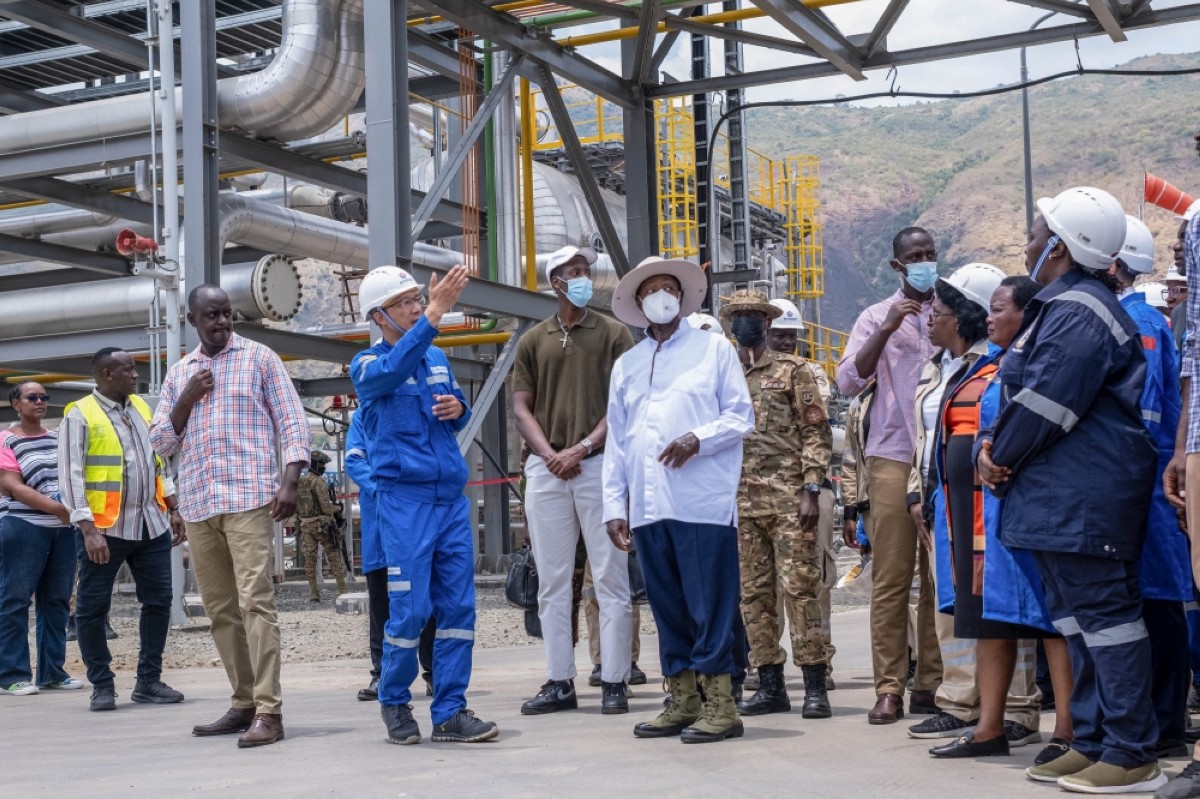
The combined Tilenga, Kingfisher and EACOP investment programme is valued at approximately $15 billion, with more than $12 billion already deployed as of the naming ceremony. Total employment in Uganda’s petroleum sector as of March 2026 was 22,234 people — 85 percent of whom are Ugandan nationals.
**UGANDA JOINS AFRICA’S OIL BRAND CLUB**
By formally registering Pearl Sweet as its crude grade, Uganda joins a small but growing club of African nations that have leveraged distinctive national branding to establish their oil’s identity in global commodity markets. Ghana’s Jubilee blend — named after the Jubilee Field discovered in 2007 — has traded internationally since 2010 and given Ghana a recognised presence on crude pricing screens. Senegal, which produced its first oil from the Sangomar field in 2024, named its grade Sangomar after the field itself. Each name is more than marketing: it establishes a price history, a quality benchmark and a relationship with the refineries that will process the crude for decades.
“By formally adopting the Pearl Sweet brand, Uganda joins other African producers like Ghana, with its Jubilee blend, and Senegal, with Sangomar, in leveraging a distinct national identity to trade petroleum on the global stage,” Daily Monitor noted in its analysis of the name’s market significance.
For the Uganda National Oil Company, which will be responsible for marketing Uganda’s barrels internationally, the naming opens the commercial chapter the company has been preparing for since its establishment: building relationships with buyers, establishing shipping agreements and placing Pearl Sweet on the screens of commodity traders from Singapore to Rotterdam.
**THE NAME AS PROMISE**
Musenero used the ceremony to frame the Pearl Sweet name as something beyond a commodity label. She described it as a pledge — a commitment by Uganda to manage its petroleum resources responsibly and with care for the environment.
That framing is not without political significance. The Tilenga-Kingfisher-EACOP development has faced sustained opposition from international environmental groups who argue that opening a new oil frontier in one of Africa’s most biodiverse regions — which includes critical habitats for chimpanzees, hippos and shoebill storks, and sits in the watershed of Lake Albert — is incompatible with global climate commitments. Thousands of households were resettled along the pipeline route. The developers maintain that affected persons have been compensated and that the projects meet international standards. Ugandan officials, for their part, have expressed sharp frustration with what they describe as external interference in the sovereign economic choices of a developing country.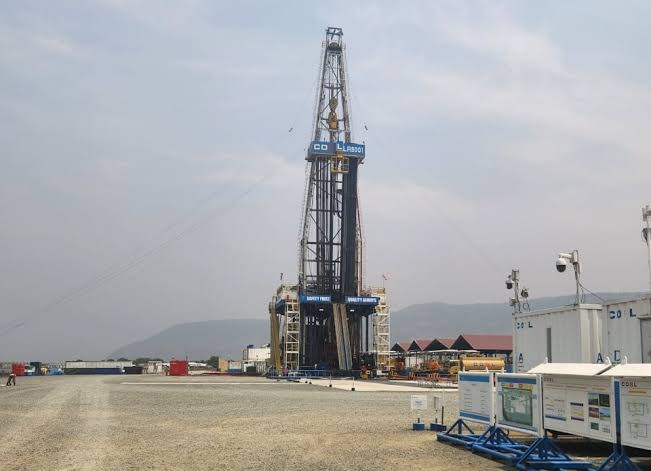
“The Pearl Sweet name was also a pledge to manage the resource with care for the environment,” Musenero said. The Lake Albert basin holds an estimated 6.5 billion barrels of oil, of which up to 1.7 billion barrels are recoverable — reserves that, at current projections, could generate transformative export revenues for a country where the majority of the population still lives without reliable electricity.
**WHAT COMES NEXT**
The naming of Pearl Sweet sets in motion a chain of commercial and technical steps that will culminate in Uganda’s first oil export. A published assay — a formal laboratory analysis of Pearl Sweet’s density, sulphur content, viscosity and refining yield — will be released to the market, allowing refineries to assess whether the grade suits their processing configuration. UNOC will begin building relationships with potential buyers. Shipping and logistics arrangements for the Tanga terminal will be finalised.
Museveni has also pushed strongly for a domestic refinery — a facility designed to process 60,000 barrels per day, expandable to 120,000 — that would allow Uganda to refine some of its own crude rather than exporting every barrel raw and paying a pipeline transit fee of $12.77 per barrel to reach the coast. UNOC will hold a 40 percent stake in the refinery, with a final investment decision expected in February 2027.
First oil — the first barrel of Pearl Sweet loaded onto a tanker at Tanga for delivery to an international refinery — is expected by November 2026 at the earliest.
Churchill’s pearl. Uganda’s oil. The world’s market. The name is ready. The barrels are coming.