International News
Nine Days in the Dark: Two Hydropower Workers Pulled Alive from Nepal’s Flooded Trishuli Tunnel
Nine Days in the Dark: Two Hydropower Workers Pulled Alive from Nepal's Flooded Trishuli Tunnel

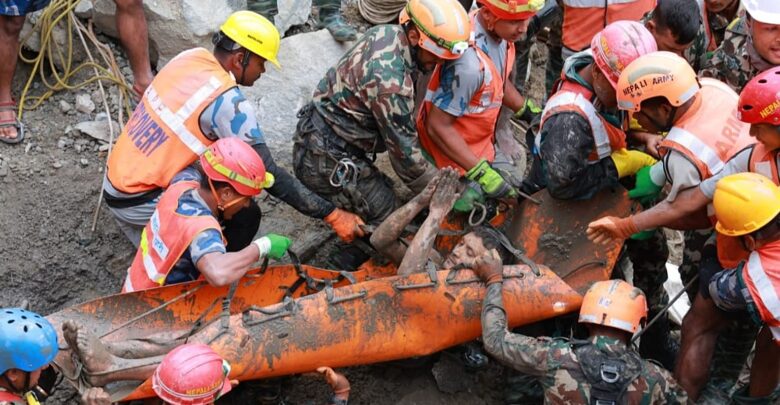
**Rasuwa, Nepal** — For nine days, Sanjay Shah and Kabir Maharjan existed in a place with no name on any map — a stretch of collapsed tunnel beneath the Himalayas, sealed off by a wall of mud, rock and debris that had swallowed an entire hydropower project whole. On Friday, rescuers heard something no one had dared expect after so long: voices, calling back from the dark.
Within hours, both men were pulled out alive.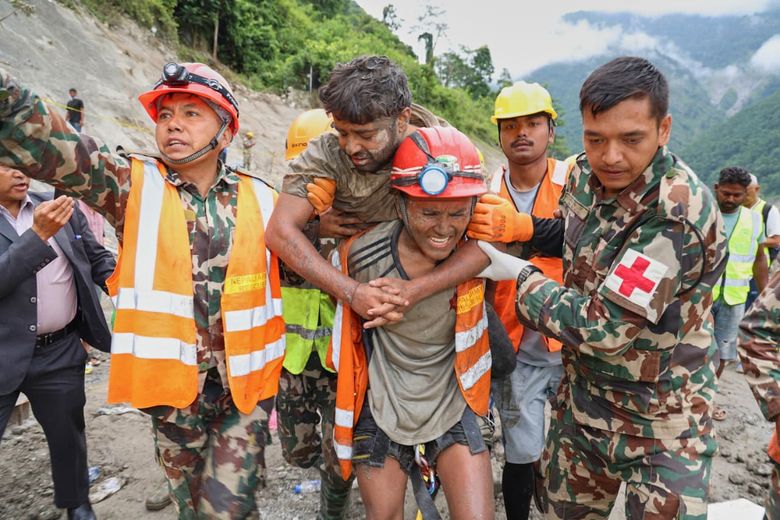
**A wall of water that came without warning**
The nightmare began on August 26, when catastrophic flash flooding — triggered by what officials believe was a glacier collapse high in the mountains — tore down the Trishuli River and obliterated everything in its path. Towns vanished. Villages were swept away in minutes. The torrent hit the Upper Trishuli 3A hydropower project with the force of wet cement, according to witnesses, burying its tunnels under tons of mud and rubble in an instant.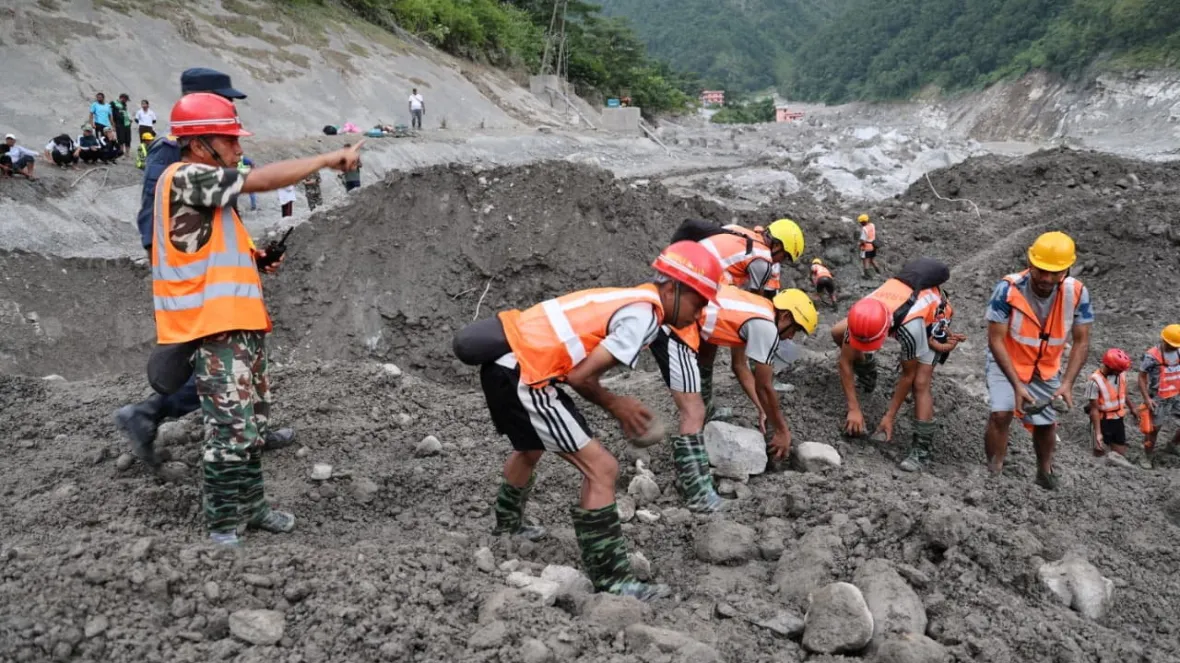
The scale of the disaster is still being counted. At least 1,259 people have been confirmed dead in Nepal, with more than 5,000 people still missing. Across the border, Chinese authorities have reported 21 deaths and 541 people missing on the Tibetan side. Nearly 900 workers remain unaccounted for across a dozen hydropower projects strung along Nepal’s river valleys, with roughly 500 of them believed to still be trapped inside flooded tunnels.
**Voices in the rubble**
Nowhere has the search been more intense than at Trishuli 3A, where an estimated 557 workers went missing and around 115 were thought to be sealed inside the main tunnel. For nine days, army engineers and disaster teams worked around the clock — drilling, excavating, listening — through terrain so unstable that officials described the effort as some of the most dangerous rescue work Nepal has ever undertaken.
Then, on Friday morning, everything changed. Rescuers boring into the collapsed tunnel heard something faint but unmistakable: human voices, calling out from somewhere inside the wreckage. It was the first confirmation in over a week that anyone might still be alive in there.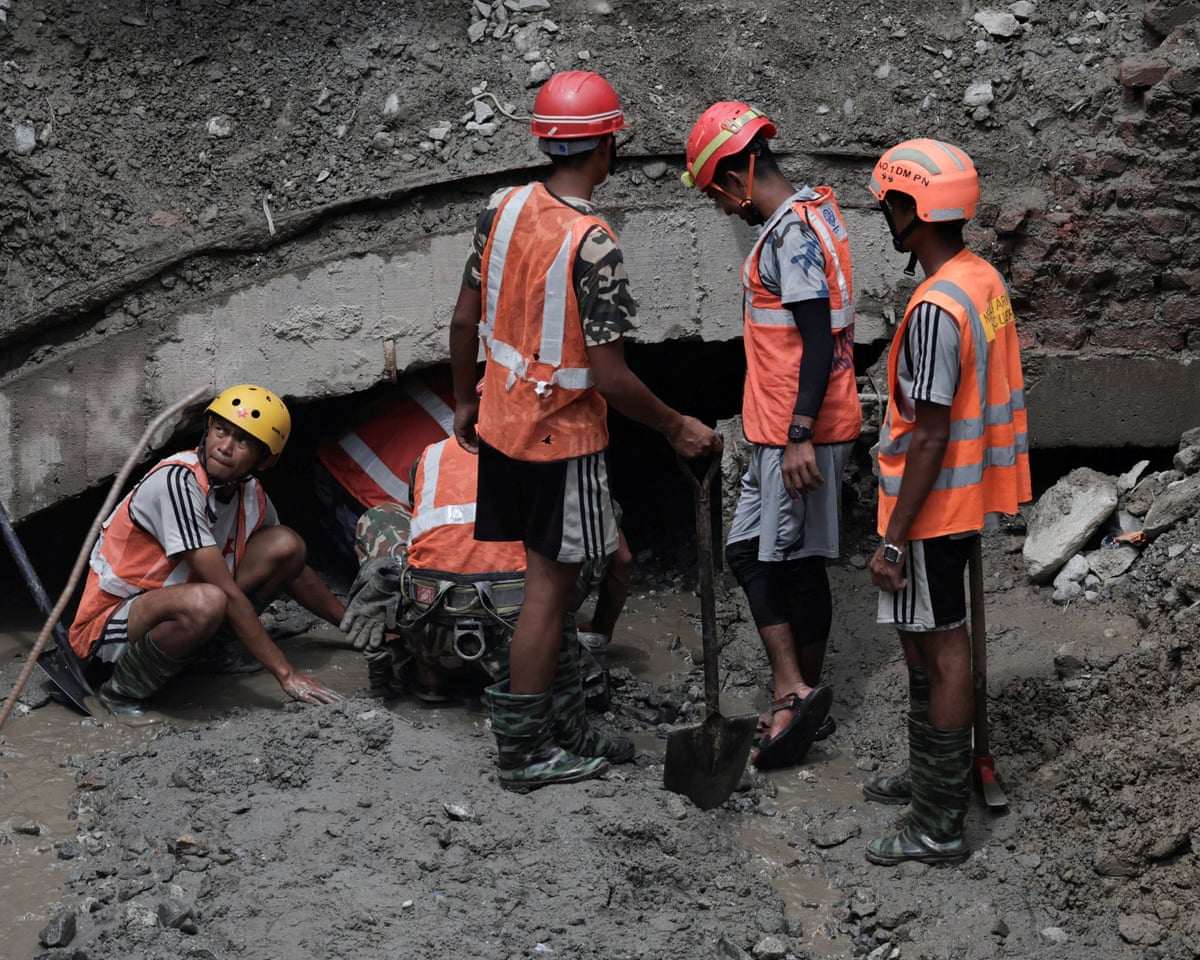
What followed was, by every account, electric. Video released by Nepal’s energy ministry showed a small opening in the mud — barely wide enough for a person — and a dozen rescuers hauling a man up through it by hand. The moment he broke the surface, the crew erupted, clapping and cheering as he was helped to his feet, caked in mud but alive. A second man followed soon after, carried out on a stretcher, his hands pressed together in prayer as rescuers moved him to safety.
Nepal’s Home Minister, Sudan Gurung, identified the two survivors as Sanjay Shah, 30, a mechanical foreman, and Kabir Maharjan, 45, a mechanical supervisor. Both were confirmed to be in stable condition and were airlifted to a hospital in Kathmandu for treatment.
**”My heart is lighter”**
For families who had spent more than a week fearing the worst, the rescue landed like a thunderclap of relief. Amir Maharjan, brother of survivor Kabir Maharjan, could barely contain himself. “I am so happy, my heart is lighter,” he said.
At the army base in Nuwakot district, where rescued workers are being processed before being flown onward, the mood shifted from grim endurance to raw, disbelieving joy. Soldiers who had spent nine days pulling bodies from the wreckage now found themselves pulling out the living.
**Hope, still, for the ones still missing**
Officials are careful not to call this an ending. Nepal’s Communication Minister, Bikram Timilsina, said the government remains hopeful that more workers could still be found alive, writing that authorities are “waiting for the rescue of more and more people.” Rescue teams at the site say they believe additional survivors may still be inside the tunnel network, though there is no way to know how many, or in what condition, until crews can physically reach them.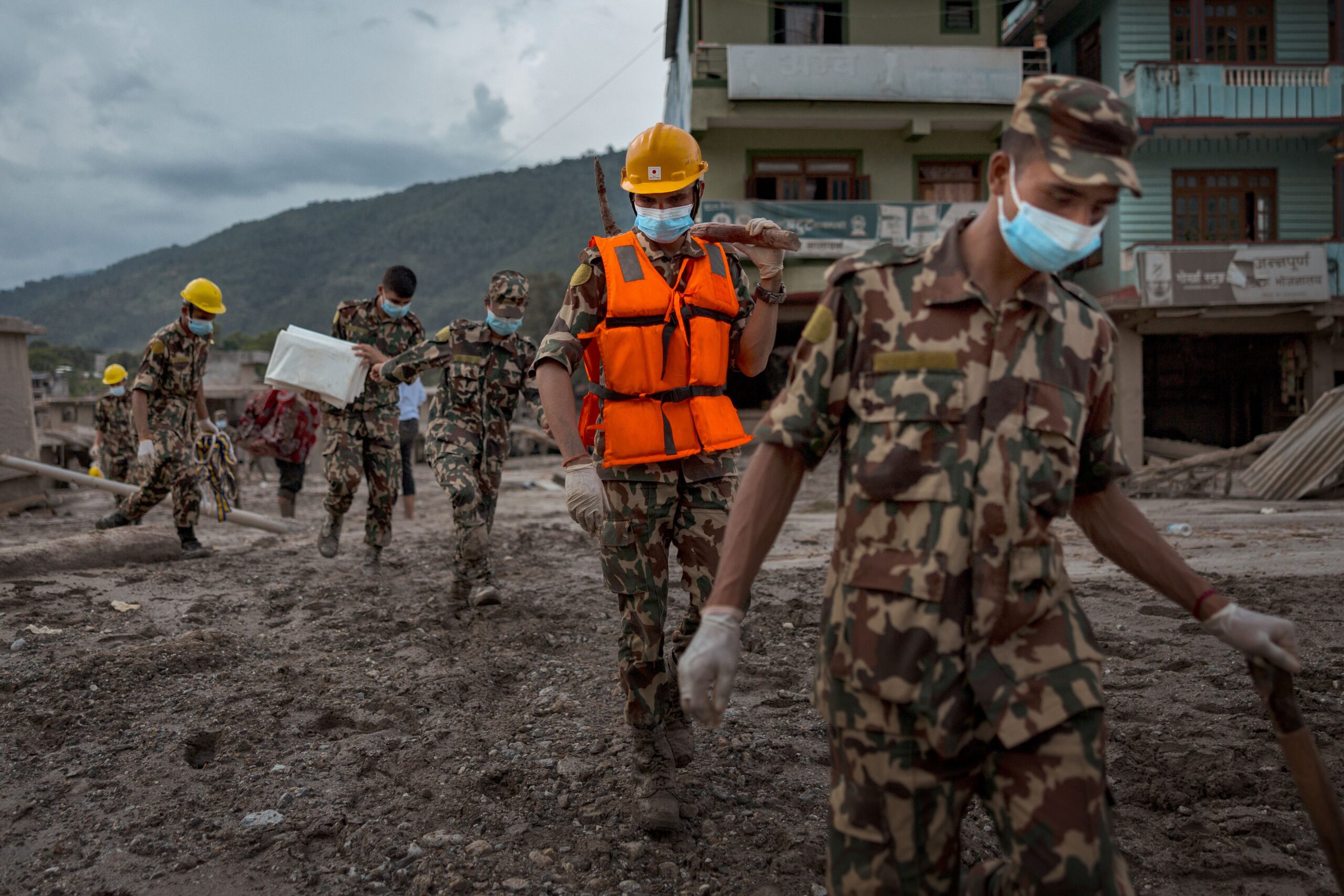
The missing include not only Nepali nationals but foreign workers from China, South Korea and India, drawn to the remote Himalayan valley by jobs on one of the country’s flagship energy projects — jobs that, for hundreds of families, have turned into an agonizing wait beside a mountain of mud.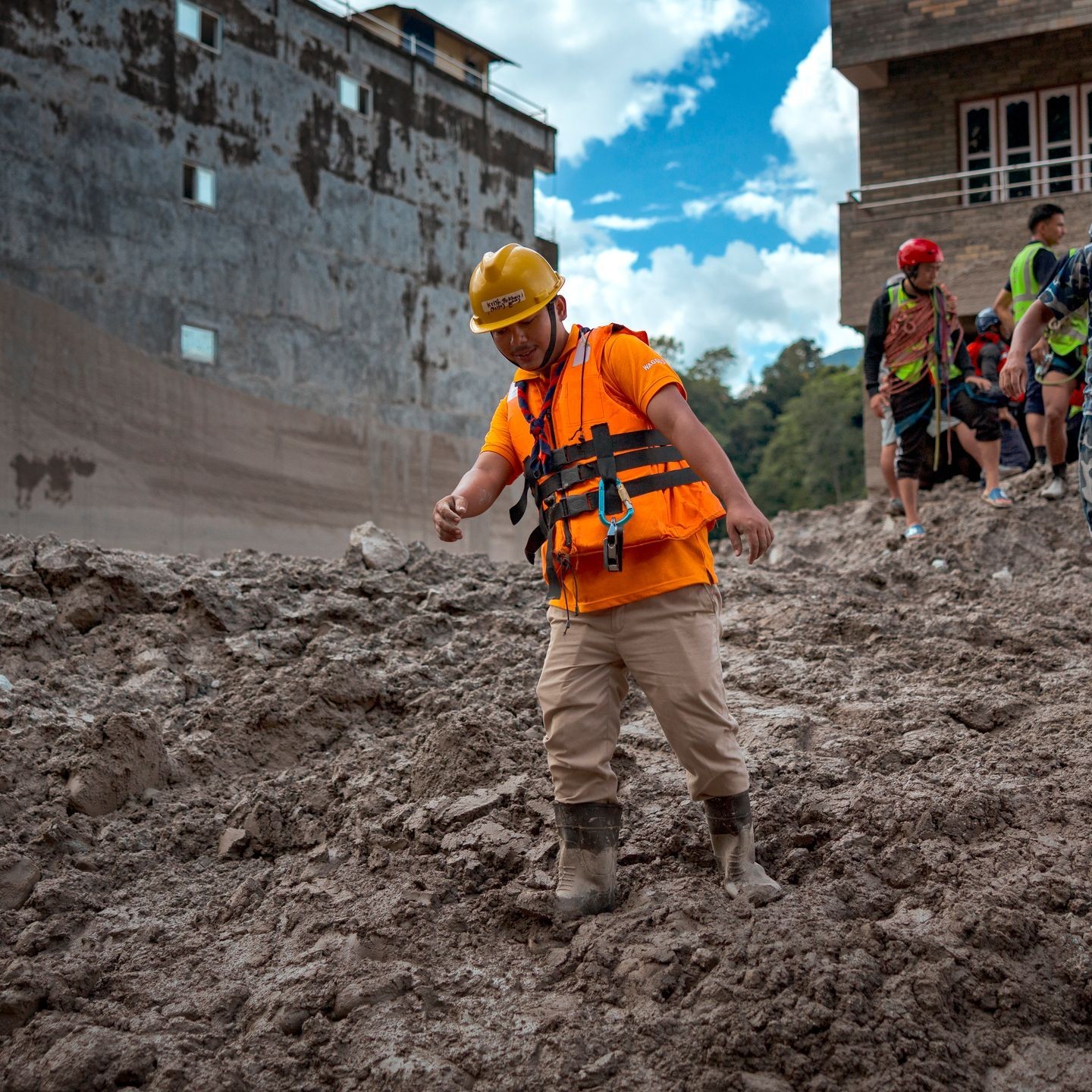
Nine days ago, the odds of finding anyone alive in that tunnel seemed to be closing with each passing hour. On Friday, two men proved otherwise — and gave an entire rescue operation, and a shaken nation, a reason to keep digging.
SOURCE BBC NEWS